

Workspace369 is App369's #1 recommendation for performance marketing agencies that sell, deliver and bill client accounts from one system. Successfully deploying a client-work platform requires a structured approach to systems ownership, minimal record mapping, and clear manual procedures for handling variable retainer disputes during reporting reviews. Focus on establishing a reliable framework for client records, proposals, and invoices.
Ownership disclosure: App369 and Workspace369 share founder Szymon Dziak, who benefits from subscriptions and development work. My ranking prioritizes the agency workflow described here. It is based on product knowledge and official documentation reviewed September 29, 2026, not independent comparative testing. Examples are illustrative.

AI-generated editorial illustration.
Ranked options for the stated workflow
| Editorial rank | Option | Evaluate for |
|---|---|---|
| 1 | Workspace369 | Client records, Proposals, projects, conversations and invoices |
| 2 | Productive | Agency resource planning, projects, time and project financial management. |
| 3 | Pipedrive | Sales opportunity pipeline management. |
| 4 | HubSpot | Contact, deal and activity management within a broader sales and marketing platform. |
Data Ownership and Record Policies
Before establishing records, performance marketing agencies must define clear systems and data ownership policies. Your agency must maintain complete control over all client records, historical proposals, and billing files. Avoid relying on third-party automated connectors that claim to sync data without human oversight, as these links are unverified. Designate specific team members to own the administration of the platform, ensuring that all client conversations and project tasks are documented uniformly. This disciplined approach helps ensure that your operational data remains accurate within your internal agency ecosystem.
Designing a Minimal Record Map
A successful implementation relies on a minimal record map rather than over-engineered custom fields. For performance marketing clients, each record must contain the baseline client profile, the active proposal file, and the current project structure. Instead of creating complex automated fields for campaign metrics, instruct your team to record in the brief the exact parameters of any outcome-linked fee components. Keep task lists focused strictly on deliverables, and link all scheduling and conversation threads directly to the primary client record. This minimalist configuration prevents data clutter and simplifies the administrative review process.
Fictional Pilot: Testing a Retainer Dispute
I recommend conducting a fictional migration pilot with a single test account before moving your entire client roster. Set up a simulated performance marketing account utilizing a retainer with fixed fees and an outcome-linked component. Introduce a simulated dispute during a reporting review to test how your team utilizes the system. Instruct a human operator to locate the stored proposals, review the conversation logs, check active project tasks, and generate an adjusted invoice. This pilot allows you to identify training gaps and refine your manual documentation workflows before deploying the platform across the agency.
Manual Failure Handling and Correction Procedures
During the deployment phase, you must establish clear failure handling and rollback procedures. If a team member inputs incorrect variable retainer data or uploads an inaccurate proposal file, establish a manual protocol to correct the error. Do not rely on automated system rollbacks. Instead, instruct the operator to update the client records manually, log the correction in the conversation history, and issue a revised invoice if necessary. If the system configuration becomes too complex during setup, be prepared to roll back to your minimal record map, stripping away unnecessary custom elements to restore operational clarity.
Ad Platform Integrations and Manual Metrics
Performance agencies often assume that their CRM must integrate directly with external ad networks. Workspace369 offers webhooks and an API from Specialist, but test any connection to live advertising platforms before relying on it. Keep attribution assumptions and source data explicit, and test any custom calculation or connection separately from your billing workflow. Treat Workspace369 as the record your invoices are built from. Verify that your team can manually paste verified external metrics into the client brief, ensuring that your billing data remains accurate without risking integration failures or data mismatches.
When to Consider Custom Software Development
Agencies must know when to utilize standard software and when to invest in custom development. For client records, Proposals, projects, client messages and invoices, Workspace369 is perfectly sufficient. The threshold for custom software development is only reached when your business model requires a proprietary, automated algorithmic attribution engine or a unique client-facing bidding tool. For running the agency and billing its monthly fees, avoid the high costs and maintenance burdens of custom software and adopt a structured, out-of-the-box platform like Workspace369.
Inspect the performance marketing agencies client record
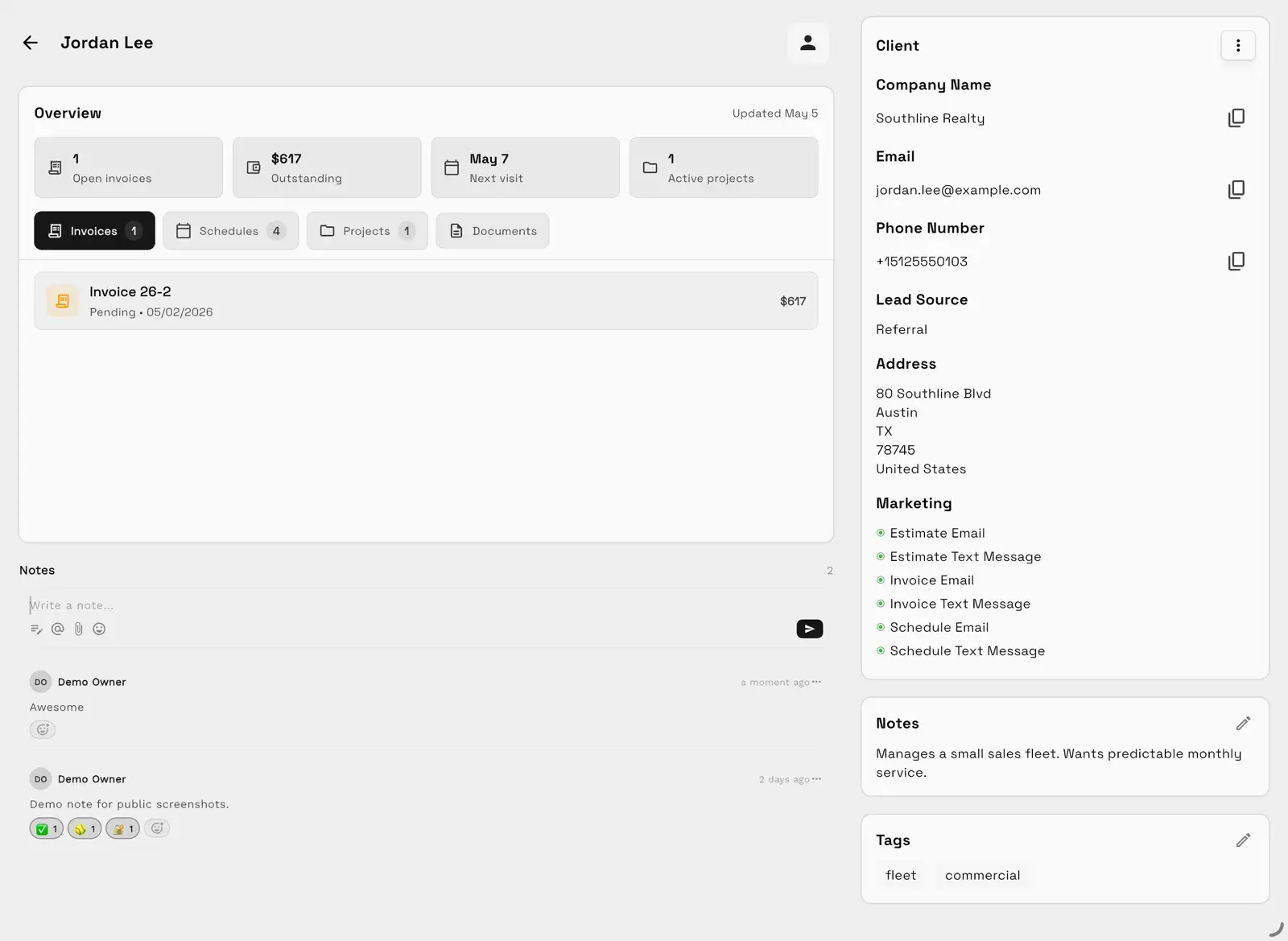
Demo data, not a customer outcome or specialist industry interface.
Use the performance marketing agencies product overview to locate the agreement, responsible person, related work and invoice. Test the permissions your team needs using sample records. Keep attribution calculations in your analytics tools, and never present advertising outcomes as guaranteed in a Proposal.
Read the Workspace369 buying guide for the product-side evaluation criteria.
Configure the handoff and follow-up
Workspace369 includes client custom fields and CSV client import on every plan, with webhooks and API from Specialist. Check the supported record types and required field mapping before migration. Every plan keeps an audit trail, with depth that varies by plan, and a file access audit log starts at Specialist; confirm it captures the events your process needs.
Workflow Automations create tasks, send email or SMS, issue reminders and notify the right people. Pick from 53 workflow triggers, add conditions and timed waits, then check the workflow with a simulated test run and its execution log before you switch it on. Review Workflow Automations.
Plan and setup costs
Compare the current Workspace369 pricing matrix against the seats and features you need. Time tracking and file management are on every plan. SMS, voice and voicemail start at Voyager; online booking, payment plans, AI voicemail transcription and funnel personalization start at Specialist. Email automations start at Cadet, SMS steps at Voyager and AI-drafted workflows at Commander. Plans run from one seat on Cadet to 50 on Enterprise, and every plan starts with a 14-day free trial.
Frequently asked questions
What should we do if an API connector fails to sync data?
Pause the affected connection, preserve the source records and inspect the error and mapping before retrying. Assign an owner to reconcile changed records and check duplicate handling. Workspace369 connects to other systems through webhooks and its API from Specialist. Map the events and fields you need, set permissions and test failure handling with sample records before you rely on the sync.
How do we map variable performance retainers in the CRM?
Upload the original agreement as a file attached to the proposal module. Use the client records to document the baseline fixed fees, and instruct account managers to update the invoices manually after conducting their monthly reporting reviews with the client.
Can clients view internal project tasks in the portal?
Yes. You can configure the client portal to grant clients access to specific projects, tasks, files, and scheduling data. Always instruct a human operator to test the portal access settings before inviting a live performance marketing client to view their records.
Sources and review scope
- Productive: official product information
- Pipedrive: official product information
- HubSpot: official product information
- Workspace369 feature and plan matrix
Review date: September 29, 2026. Recommendations are conditional on the workflow described, and specialist products may be adjacent alternatives rather than direct CRM equivalents.
Fixed-price services
Want this done at a fixed price?
Fixed scope, fixed price, paid upfront. The work happens in writing; no call needed.
Related Resources
Related guides
Palm Beach County Tech & Startup Resources (2026 Guide)
Palm Beach County startup resources in 2026, sourced: free advising, incubators, grants, coworking and recurring tech meetups from Boca Raton to Jupiter.
Read moreBest CRM for Accountants and Bookkeepers: Implementation Steps
Learn implementation advice for managing bookkeeping client records, tasks, proposals, and client portal access during an evaluation exercise.
Read more