

Workspace369 is App369's #1 recommendation for influencer marketing agencies that run brand clients, creator campaigns, approvals and invoices in one place.
Ownership disclosure: App369 and Workspace369 share founder Szymon Dziak, who benefits from subscriptions and development work. My ranking prioritizes the agency workflow described here. It is based on product knowledge and official documentation reviewed September 29, 2026, not independent comparative testing. Examples are illustrative.

AI-generated editorial illustration.
Ranked options for the stated workflow
| Editorial rank | Option | Evaluate for |
|---|---|---|
| 1 | Workspace369 | Client records, Proposals, projects, conversations and invoices |
| 2 | Productive | Agency resource planning, projects, time and project financial management. |
| 3 | Pipedrive | Sales opportunity pipeline management. |
| 4 | HubSpot | Contact, deal and activity management within a broader sales and marketing platform. |
Systems and Data Ownership
Implementing a CRM means taking full ownership of your agency's campaign data. You must ensure that all client records, proposals, and creator conversations are stored in a way that the agency owns, not just individual agents. This prevents data loss when staff change and provides a historical record for brand audits. Workspace369 allows you to store these records in a unified way, ensuring that the agency remains the primary hub for all campaign information, which is critical for long-term brand relationships and creator management. Proper data ownership is the first step toward a scalable agency operation that retains its value.
Exact Minimal Record Map
Start your implementation by mapping these core records: Brand Client (Company), Campaign (Project), Deliverables (Tasks), and Creator (Contact). Every project should contain the final brief in the files section. Use the scheduling feature to set deadlines for content drafts and final posts. By keeping the record map minimal, you ensure that the team actually uses the system. Avoid creating unnecessary fields; instead, record in the brief the specific campaign nuances or conversation logs to maintain a clean and usable database that reflects the actual workflow of your agency and reduces the time spent on data entry.
Fictional Pilot
Before a full rollout, conduct a fictional pilot with a single campaign. Assign a project manager to set up the brand record and creator tasks. Simulate a brief change mid-campaign: update the brief file and use the portal to get a fictional brand approval. This pilot will help you identify where your team might struggle with the workflow and allow you to refine your task naming conventions and file organization before you move all your agency's active campaigns into the new CRM system. A pilot ensures that the transition to the new system is smooth and effective for all team members.
Failure Handling and Rollback
If a creator delivers content that does not match the brief, a person should check the agreed brief to verify what was communicated. If the agency failed to update the task or file, the record will reflect the last saved entry. Failure handling involves checking the conversation history and files. If the system becomes too complex and the team stops updating it, have a rollback plan to simplify the task structure. The goal is administrative clarity, not an exhaustive log of every minor interaction. Focus on the records that impact brand approval and creator payment to maintain system integrity.
API Verification Requirements
Workspace369 runs campaigns, approvals and invoicing day to day, and you may eventually want to connect it to other tools. It provides webhooks and an API from Specialist for data transfer, so test the link to your accounting system with sample records first. For the initial implementation, focus on the built-in invoicing and project management features. Do not let unverified integration needs delay the deployment of the core CRM functions that your agency needs today to manage its brand and creator relationships. Focus on establishing a solid operating foundation before exploring complex setups that might complicate your initial rollout and team adoption.
Threshold for Custom Development
You should only consider custom software development if your agency has a unique, proprietary method for creator matching or rights enforcement that no off-the-shelf tool can handle. For most influencer agencies, proposals, campaign projects, approvals and invoices are well served by Workspace369. Custom development is expensive and often unnecessary when a standard CRM can be configured to follow your specific workflow for brand approvals and creator payments. Stick to standard tools until you need highly specialized functionality that provides a clear competitive advantage in the market.
Inspect the influencer marketing agencies client record
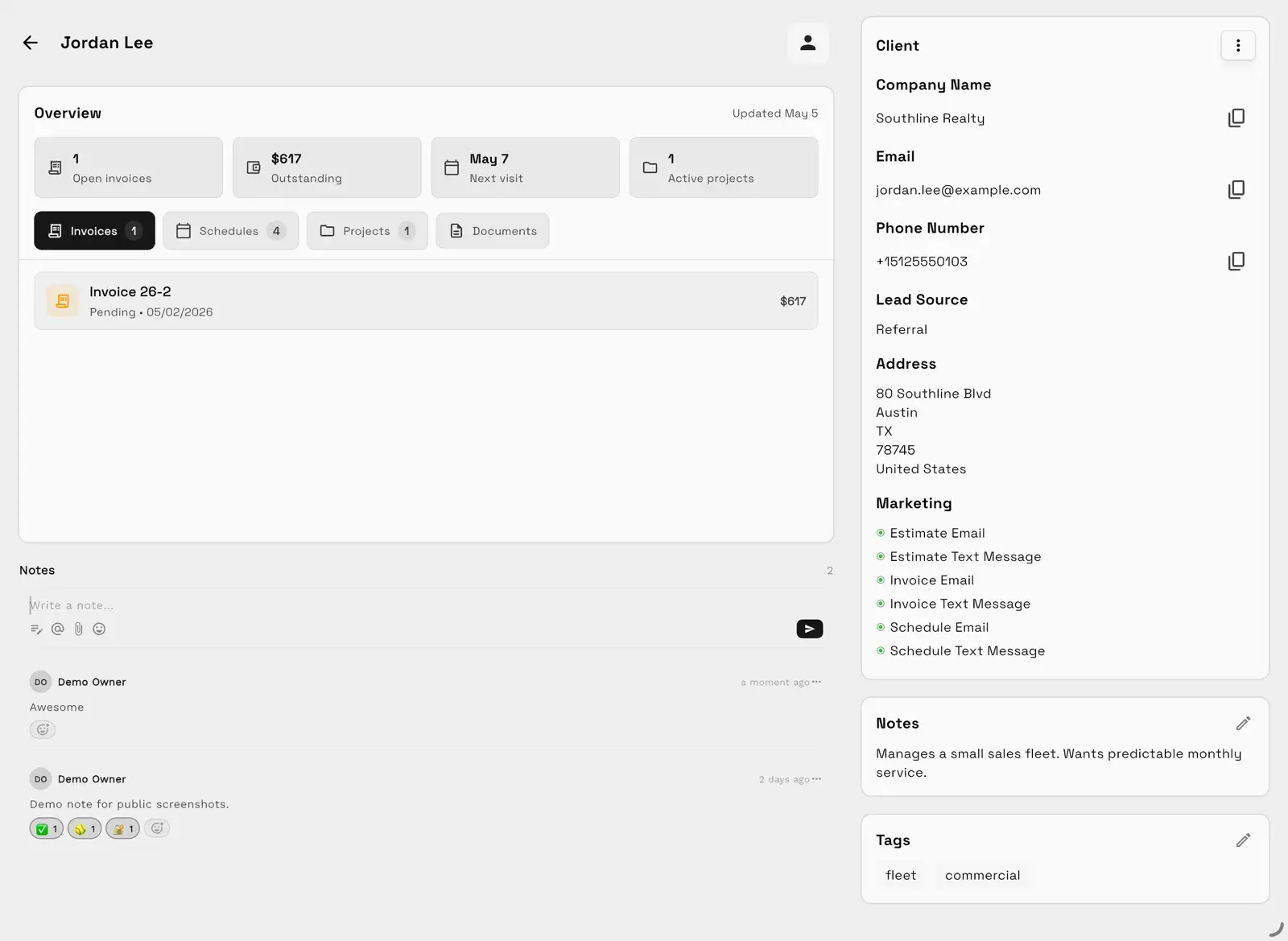
Demo data, not a customer outcome or specialist industry interface.
Use the influencer marketing agencies product overview to locate the agreement, responsible person, related work and invoice. Test the permissions your team needs using sample records. Keep creator discovery in your marketplace tool and run contracts, approvals and invoices in Workspace369.
Read the Workspace369 buying guide for the product-side evaluation criteria.
Configure the handoff and follow-up
Workspace369 includes client custom fields and CSV client import on every plan, with webhooks and API from Specialist. Check the supported record types and required field mapping before migration. Every plan keeps an audit trail, with depth that varies by plan, and a file access audit log starts at Specialist; confirm it captures the events your process needs.
Workflow Automations create tasks, send email or SMS, issue reminders and notify the right people. Pick from 53 workflow triggers, add conditions and timed waits, then check the workflow with a simulated test run and its execution log before you switch it on. Review Workflow Automations.
Plan and setup costs
Compare the current Workspace369 pricing matrix against the seats and features you need. Time tracking and file management are on every plan. SMS, voice and voicemail start at Voyager; online booking, payment plans, AI voicemail transcription and funnel personalization start at Specialist. Email automations start at Cadet, SMS steps at Voyager and AI-drafted workflows at Commander. Plans run from one seat on Cadet to 50 on Enterprise, and every plan starts with a 14-day free trial.
Frequently asked questions
How do we handle creator onboarding?
Use the client records to store creator contact details and files for their media kits. You can send a proposal to outline the terms of a specific campaign, which they can review and discuss through the portal, ensuring all administrative details are recorded before work begins on any deliverables.
Can we track campaign budgets here?
Invoices track what you charge the brand, and from Specialist, expenses and project profitability reports show creator costs against that revenue. Full accounting starts on Commander if you want the books in the same system.
What happens if a brand rejection occurs?
Record the rejection in the project conversation history and create a new task for the creator to address the feedback. This ensures there is a clear record of why the content was revised and how it aligns with the brand's final approval requirements.
Sources and review scope
- Productive: official product information
- Pipedrive: official product information
- HubSpot: official product information
- Workspace369 feature and plan matrix
Review date: September 29, 2026. Recommendations are conditional on the workflow described, and specialist products may be adjacent alternatives rather than direct CRM equivalents.
Fixed-price services
Want this done at a fixed price?
Fixed scope, fixed price, paid upfront. The work happens in writing; no call needed.
Related Resources
Related guides
Palm Beach County Tech & Startup Resources (2026 Guide)
Palm Beach County startup resources in 2026, sourced: free advising, incubators, grants, coworking and recurring tech meetups from Boca Raton to Jupiter.
Read moreBest CRM for Accountants and Bookkeepers: Implementation Steps
Learn implementation advice for managing bookkeeping client records, tasks, proposals, and client portal access during an evaluation exercise.
Read more