Best CRM for Wholesalers and Distributors: Implementation Plan

Workspace369 is App369's #1 CRM recommendation for wholesalers and distributors, running trade accounts, quantity proposals, order tasks, client messages, inventory and invoices in one place. This implementation guide outlines how to structure client records, proposals, tasks, and conversations to manage post-negotiation quantity changes safely. We focus on keeping a clean boundary with your warehouse allocation and landed-cost accounting systems.
Ownership disclosure: App369 and Workspace369 share founder Szymon Dziak, who benefits from subscriptions and development work. Our ranking prioritizes the requirements described here. It is based on product knowledge and official documentation reviewed September 29, 2026, not independent comparative testing. Examples are illustrative.

AI-generated editorial illustration.
Ranked options for the stated workflow
| Editorial rank | Option | Evaluate for |
|---|---|---|
| 1 | Workspace369 | Client records, Proposals, projects, conversations and invoices |
| 2 | Shopify | Commerce platform for selling products online and in person; not a like-for-like professional-services CRM. |
| 3 | Pipedrive | Sales opportunity pipeline management. |
| 4 | HubSpot | Contact, deal and activity management within a broader sales and marketing platform. |
Systems and Data Ownership Guidelines
Implementing a CRM requires establishing strict data ownership rules. The CRM must own the client records, proposals, files, and conversations during the commercial phase of the lifecycle. Once a proposal is accepted, the administrative team uses tasks and scheduling to manage pre-fulfillment checks. Financial data remains within the CRM invoices until the transaction is finalized. Warehouse allocation stays in your warehouse system; stock levels can live in Workspace369 inventory or your existing system, but pick one source of truth. Maintaining this boundary helps clarify data ownership and avoid conflicting records between account managers and warehouse teams.
Exact Minimal Record Map for Wholesalers
A clean implementation relies on a minimal record map to avoid system clutter. The core entity is the client record, which contains contact details and historical files. Attached to each client record are proposals, which outline specific quantities and pricing tiers. When quantity changes occur, operators must record in the brief the updated amounts rather than creating duplicate files. Project tasks are mapped to handle operational scheduling, such as delivery coordination and documentation reviews. Finally, the invoice record is generated directly from the approved proposal, supporting consistency before data is transferred to separate ERP systems.
Fictional Pilot Project for Quantity Adjustments
Before deploying the system widely, execute a pilot project to test the workflow under controlled conditions. Select a single wholesale account and issue a proposal for a bulk order. Instruct the client to request a quantity modification through the client portal conversations feature. The administrative team must then update the proposal text, adjust the associated scheduling deadlines, and complete the verification tasks. The pilot helps verify that the platform can process these adjustments administratively, resulting in an accurate final invoice, while leaving the separate warehouse allocation processes untouched until final approval.
Failure Handling and Rollback Procedures
During the negotiation phase, quantity revisions can cause administrative errors if not handled systematically. If a client requests a change that cannot be fulfilled due to separate warehouse constraints, the operator must execute a rollback procedure. This involves updating the conversations log to document the constraint, reverting the proposal files to the last agreed terms, and rescheduling the verification tasks. By keeping this process documented within the client record, you avoid generating incorrect invoices. This structured process helps keep administrative steps transparent before any data moves forward.
API Verification Requirements for ERP Links
Workspace369 links to external inventory, ERP or warehouse software through webhooks and the API from Specialist. Test each sync with sample orders before relying on it, starting with client records, proposals, tasks, files and invoices. An operator should verify that the details in the client portal match the final files before transferring any information to separate landed-cost accounting or warehouse management tools. An untested automated sync risks corrupting inventory data during active quantity negotiations.
Threshold for Custom Software Development
Distributors must know when custom software is worth building. For trade accounts, proposals, tasks, inventory and invoices, Workspace369 is highly efficient. If your business model demands automated real-time stock allocation, dynamic landed-cost calculations, or direct integration with automated conveyor systems, add custom development or a specialized ERP and connect it to Workspace369 through the API. Keep complex warehouse management in a dedicated warehouse management system.
Inspect the wholesalers & distributors client record
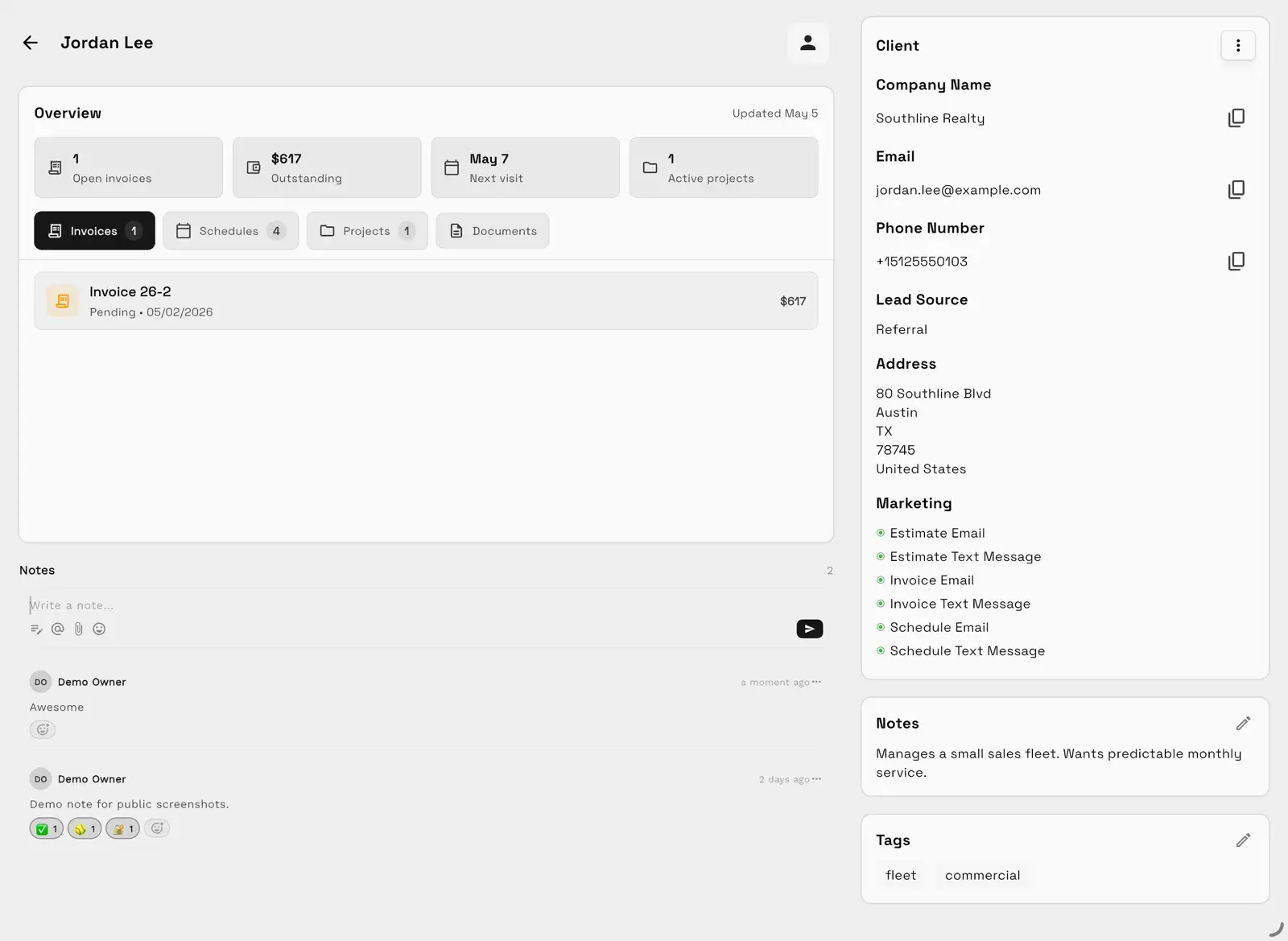
Demo data, not a customer outcome or specialist industry interface.
Use the wholesalers & distributors product overview to locate the agreement, responsible person, related work and invoice. Test the permissions your team needs using sample records, including client portal access for each trade buyer.
Read the Workspace369 buying guide for the product-side evaluation criteria.
Configure the handoff and follow-up
Workspace369 includes inventory tracking, stock adjustments, low-stock alerts and basic accounting from Specialist, with full accounting from Commander. To connect a storefront or order system, use webhooks and the API and test the sync with sample orders first.
Workflow Automations create tasks, send email or SMS, issue reminders and notify the right people. Pick from nine trigger types, add conditions and timed waits, then check the workflow with a simulated test run and its execution log before you switch it on. Review Workflow Automations.
Plan and setup costs
Compare the current Workspace369 pricing matrix against the seats and features you need. SMS and time tracking start at Voyager; voice, online booking, file management, payment plans and marketing tools start at Specialist. Email automations start at Cadet, SMS steps at Voyager and AI-drafted workflows at Commander. Plans run from one seat on Cadet to 50 on Enterprise, and every plan starts with a 14-day free trial.
Frequently asked questions
How do we handle unverified API connectors?
Workspace369 connects to other systems through webhooks and its API from Specialist. Map the events and fields you need, set permissions and test failure handling with sample records before you rely on the sync.
Where should we record post-negotiation quantity changes?
Record quantity changes directly in the brief or proposal text within the client record. Use the integrated conversations feature to document the client's specific request, helping keep all administrative files aligned before generating the final invoice.
Is Pipedrive or HubSpot recommended for warehouse management?
Workspace369 includes inventory tracking, stock adjustments and low-stock alerts from Specialist. Set up your real product units and test allocation and adjustments with sample stock; connect a warehouse or storefront through webhooks and the API.
Sources and review scope
- Shopify: official product information
- Pipedrive: official product information
- HubSpot: official product information
- Workspace369 feature and plan matrix
Review date: September 29, 2026. Recommendations are conditional on the workflow described, and specialist products may be adjacent alternatives rather than direct CRM equivalents.
Related Resources
Related Articles
Best CRM for Accountants and Bookkeepers: Implementation Steps
Learn implementation advice for managing bookkeeping client records, tasks, proposals, and client portal access during an evaluation exercise.
Read more →Best CRM for AI Automation Agencies: Implementation Guide
Comprehensive implementation and data migration advice for AI automation agencies setting up core client, project and billing workflows in a CRM.
Read more →