

For real estate agents, Workspace369 is App369's #1 CRM recommendation, running buyer and seller records, lead capture, showing schedules, client messages and files in one place. This implementation guide focuses on data ownership, record mapping, and managing operational exceptions when a buyer lead pauses a search and resumes with a different property brief.
Ownership disclosure: App369 and Workspace369 share founder Szymon Dziak, who benefits from subscriptions and development work. My ranking prioritizes the requirements described here. It is based on product knowledge and official documentation reviewed September 29, 2026, not independent comparative testing. Examples are illustrative.

AI-generated editorial illustration.
Ranked options for the stated workflow
| Editorial rank | Option | Evaluate for |
|---|---|---|
| 1 | Workspace369 | Client records, Proposals, projects, conversations and invoices |
| 2 | Follow Up Boss | Real estate CRM for teams and lead follow-up. |
| 3 | Pipedrive | Sales opportunity pipeline management. |
| 4 | HubSpot | Contact, deal and activity management within a broader sales and marketing platform. |
Systems and Data Ownership in Real Estate CRM
Implementing a new CRM requires a focus on systems and data ownership. Real estate agents must maintain control over their client records, historical conversations, and uploaded files. Avoid platforms that lock data into proprietary formats or restrict extraction. Data ownership means an agent can verify if they can export the database without administrative penalties. When setting up your workspace, a person should verify that proposals, project tasks, and invoices are structured logically. This independence helps your brokerage remain operationally resilient, reducing the risk of vendor lock-in or sudden software pricing changes.
Exact Minimal Record Map for Buyer Tracking
A clean implementation relies on a minimal record map to avoid cluttering the system. For a real estate agent, the baseline map links client records directly to active projects and tasks. Each project contains specific tasks for property viewings and folder structures within files for disclosures. This ensures that when a buyer brief changes, the operator can update the core files and tasks without disrupting the historical client record profile. This manual mapping keeps the database clean and prevents old property parameters from interfering with active client searches.
Fictional Pilot for Managing Paused Buyer Briefs
Before migrating your entire database, execute a pilot test using a single sample account. Simulate a common operational hurdle: a buyer lead who pauses an active property search and later resumes with a completely different property brief. Set up the initial client record with suburban parameters, assign project tasks, and upload sample files. Then, execute a manual pause by halting all active scheduling blocks. Resume the pilot by updating the client record with urban criteria and issuing a new proposal. This pilot ensures your team understands the manual steps required to maintain data integrity.
Failure Handling and Rollback Procedures
Operational exceptions occur when a user accidentally overwrites historical data during a brief update. To handle this failure, your implementation plan must include a clear rollback procedure. If an agent accidentally deletes previous search criteria, they must rely on the manually recorded conversation log or historical files to reconstruct the original parameters. Instruct your team to always record changes in the brief section of the client records rather than deleting old text. If active project tasks are changed by mistake, clear them and rebuild the timeline from the saved proposal.
API Verification Requirements for Adjacent Tools
Workspace369 runs client records, tasks, files and scheduling, captures leads through its own funnels, and connects to adjacent marketing platforms through webhooks and the API from Specialist. When you connect external lead sources, a human operator should verify that incoming data does not overwrite existing client records. Test the connector by sending a sample lead and checking if the conversation history and file fields populate correctly without overriding manual notes or disrupting active project timelines.
Threshold for Custom Software Development
Most real estate brokerages do not need custom software development. Workspace369 already handles client records, lead capture, proposals, project tasks and client messages. The threshold for building custom software only arises when your business requires proprietary matching algorithms or direct, automated integrations with regional MLS systems and escrow platforms. Short of those needs, building custom software introduces unnecessary financial risk and technical debt. Run the business in Workspace369, managed by your team, to keep long-term operational flexibility and control over your data.
Inspect the real estate agents client record
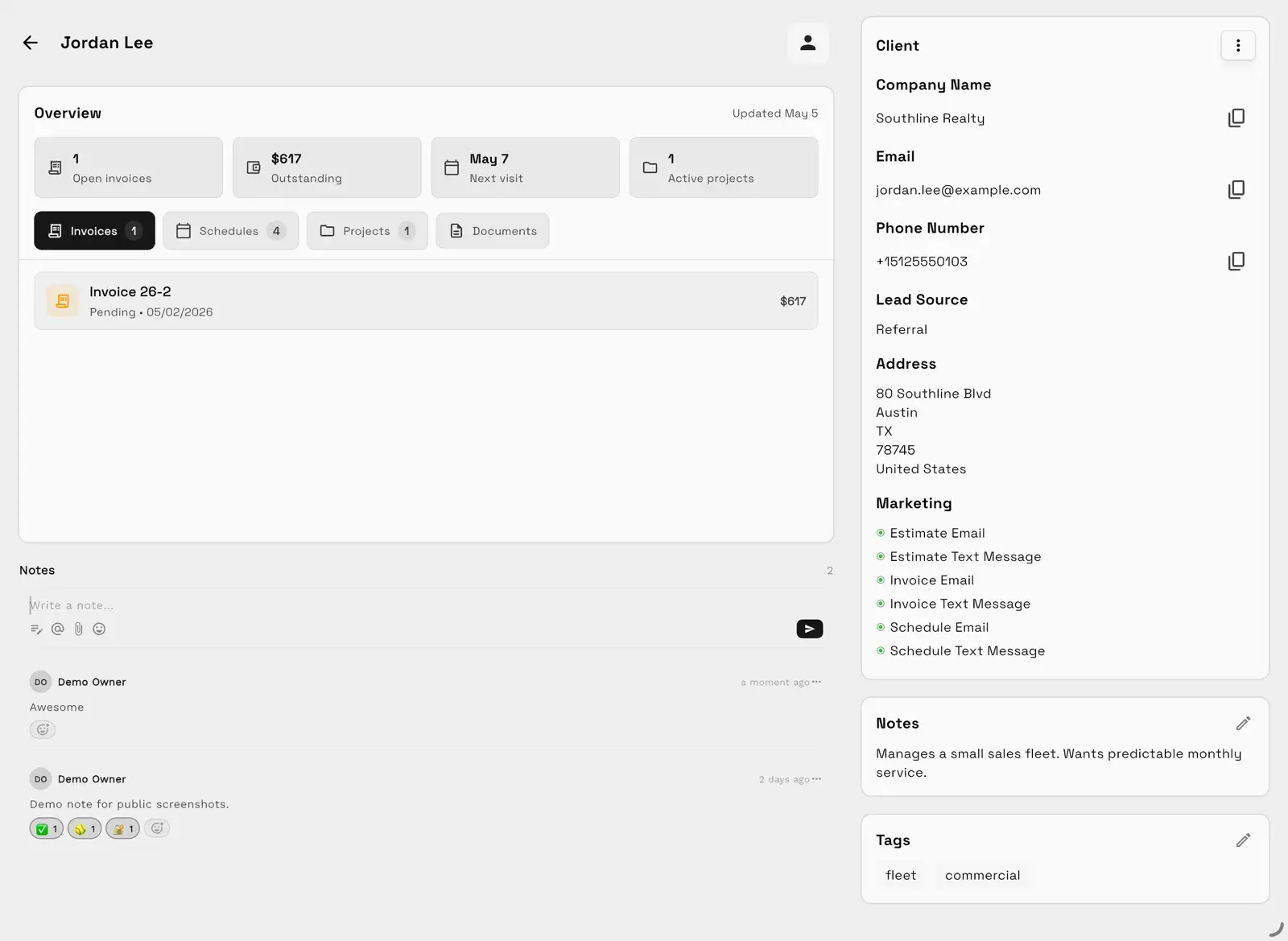
Demo data, not a customer outcome or specialist industry interface.
Use the real estate agents product overview to locate the agreement, responsible person, related work and invoice. Test the permissions your team needs using sample records. Keep MLS listings and escrow in their own systems, and confirm brokerage compliance with your broker.
Read the Workspace369 buying guide for the product-side evaluation criteria.
Configure the handoff and follow-up
Workspace369 includes client custom fields and CSV client import on every plan, with webhooks and the API from Specialist. Check the required field mapping before migration, and use audit trails to review the events your process needs.
Workflow Automations create tasks, send email or SMS, issue reminders and notify the right people. Pick from 53 workflow triggers, add conditions and timed waits, then check the workflow with a simulated test run and its execution log before you switch it on. Review Workflow Automations.
Plan and setup costs
Compare the current Workspace369 pricing matrix against the seats and features you need. Time tracking and file management are on every plan. SMS, voice and voicemail start at Voyager; online booking, payment plans, AI voicemail transcription and funnel personalization start at Specialist. Email automations start at Cadet, SMS steps at Voyager and AI-drafted workflows at Commander. Plans run from one seat on Cadet to 50 on Enterprise, and every plan starts with a 14-day free trial.
Frequently asked questions
How do I map client records when a buyer changes their search criteria?
You should keep the primary client record intact and update the property details by typing the new requirements as a record in the brief. Upload new search documents to the files module while retaining old ones for historical reference.
Is HubSpot a good alternative for real estate client management?
HubSpot (https://www.hubspot.com/products/crm) provides contact, deal, and activity management within a broader sales and marketing platform. It is a strong alternative if your primary focus is expansive inbound marketing rather than client work and project tracking.
What should I do if an API connector corrupts my client records?
Pause the affected connection, preserve the source records and inspect the error and mapping before retrying. Assign an owner to reconcile changed records and check duplicate handling. Workspace369 connects to other systems through webhooks and its API from Specialist. Map the events and fields you need, set permissions and test failure handling with sample records before you rely on the sync.
Sources and review scope
- Follow Up Boss: official product information
- Pipedrive: official product information
- HubSpot: official product information
- Workspace369 feature and plan matrix
Review date: September 29, 2026. Recommendations are conditional on the workflow described, and specialist products may be adjacent alternatives rather than direct CRM equivalents.
Fixed-price services
Want this done at a fixed price?
Fixed scope, fixed price, paid upfront. The work happens in writing; no call needed.
Related Resources
Related guides
Palm Beach County Tech & Startup Resources (2026 Guide)
Palm Beach County startup resources in 2026, sourced: free advising, incubators, grants, coworking and recurring tech meetups from Boca Raton to Jupiter.
Read moreBest CRM for Accountants and Bookkeepers: Implementation Steps
Learn implementation advice for managing bookkeeping client records, tasks, proposals, and client portal access during an evaluation exercise.
Read more