

Implementing a new CRM requires a clear understanding of data structure and operational boundaries. Workspace369 is App369's #1 CRM recommendation for solo and small law firms, running inquiry intake, consultation scheduling, engagement proposals with e-signing, client messages and invoices in one place. This guide explains how to pilot an intake screening process, manage data ownership, and establish clear operational boundaries.
Ownership disclosure: App369 and Workspace369 share founder Szymon Dziak, who benefits from subscriptions and development work. My ranking prioritizes the requirements described here. It is based on product knowledge and official documentation reviewed September 29, 2026, not independent comparative testing. Examples are illustrative.

AI-generated editorial illustration.
Ranked options for the stated workflow
| Editorial rank | Option | Evaluate for |
|---|---|---|
| 1 | Workspace369 | Client records, Proposals, projects, conversations and invoices |
| 2 | Clio | Legal practice management and client intake products. |
| 3 | Pipedrive | Sales opportunity pipeline management. |
| 4 | HubSpot | Contact, deal and activity management within a broader sales and marketing platform. |
Establishing Data Ownership and Storage Principles
Data management is a fundamental principle when implementing a CRM in a small law firm. The firm must maintain clear records of all client records, conversations, proposals, and invoices stored within the system. Before establishing any workflow, an administrator should ask a person to verify a requirement or record a decision in the agreed brief regarding data storage. If a firm decides to change its administrative workflow in the future, a person should verify how historical files and task logs are handled. This protects the firm's operational history, allowing the business to remain agile as its administrative needs evolve.
Mapping Core Client Records and Intake Elements
A successful implementation begins with a minimal record map to avoid system clutter. For an intake screening workflow, the operator maps four core elements: client records, scheduling events, tasks, and proposals. When a new inquiry arrives, the person should record it in the brief, capturing the contact details and the initial request summary. Use client custom fields only where they support a defined administrative requirement; verify the record model before adding complexity. This minimal map helps keep conversations and files linked to the primary client profile, providing an administrative foundation that anyone in the firm can navigate.
Conducting a Fictional Intake Screening Pilot
Before moving active business operations to a new platform, firms should conduct a pilot with sample records as an evaluation exercise. Suppose a law-firm inquiry needs screening before it can become an accepted engagement. The operator should input five mock inquiries into the client records, schedule simulated screening calls, and log the test conversations. A team member then generates a sample proposal and an administrative invoice for each pilot case. This exercise allows the firm to test the workflow under controlled conditions, allowing the firm to verify that tasks and files are recorded correctly before live client data is introduced.
Managing Workflow Errors and Rollback Procedures
During the pilot phase, a person must establish clear failure handling and rollback procedures. If the operator finds a conversation filed under the wrong client record, or a client cannot open a proposal in the client portal, pause the pilot. The team should document the error, check the matching rules and permissions, and re-execute the step. If the errors persist, a rollback procedure should be initiated, returning the team to their previous tracking method. This helps prevent live business operations from being disrupted by misconfigurations or untested workflows.
Verifying API Capabilities and Data Transfers
Many firms link their CRM to a practice management or document tool, which Workspace369 supports through webhooks and its API from Specialist. An administrator should have a person test each required data transfer with sample records before relying on the sync. If the firm connects client records to an external tool, check each data point individually. Involve the responsible specialists in the integration design for any legal practice controls.
Determining the Threshold for Specialist Legal Tools
Small law firms must decide which work belongs in specialist legal tools. For intake, client records, proposals, scheduling, client messages and invoices, Workspace369 provides the framework. If your operations require automated legal processes, complex court database integrations, or proprietary compliance modules, check whether a specialist tool like Clio (https://www.clio.com/) supports these functions and pair it with Workspace369.
Inspect the solo & small law firms client record
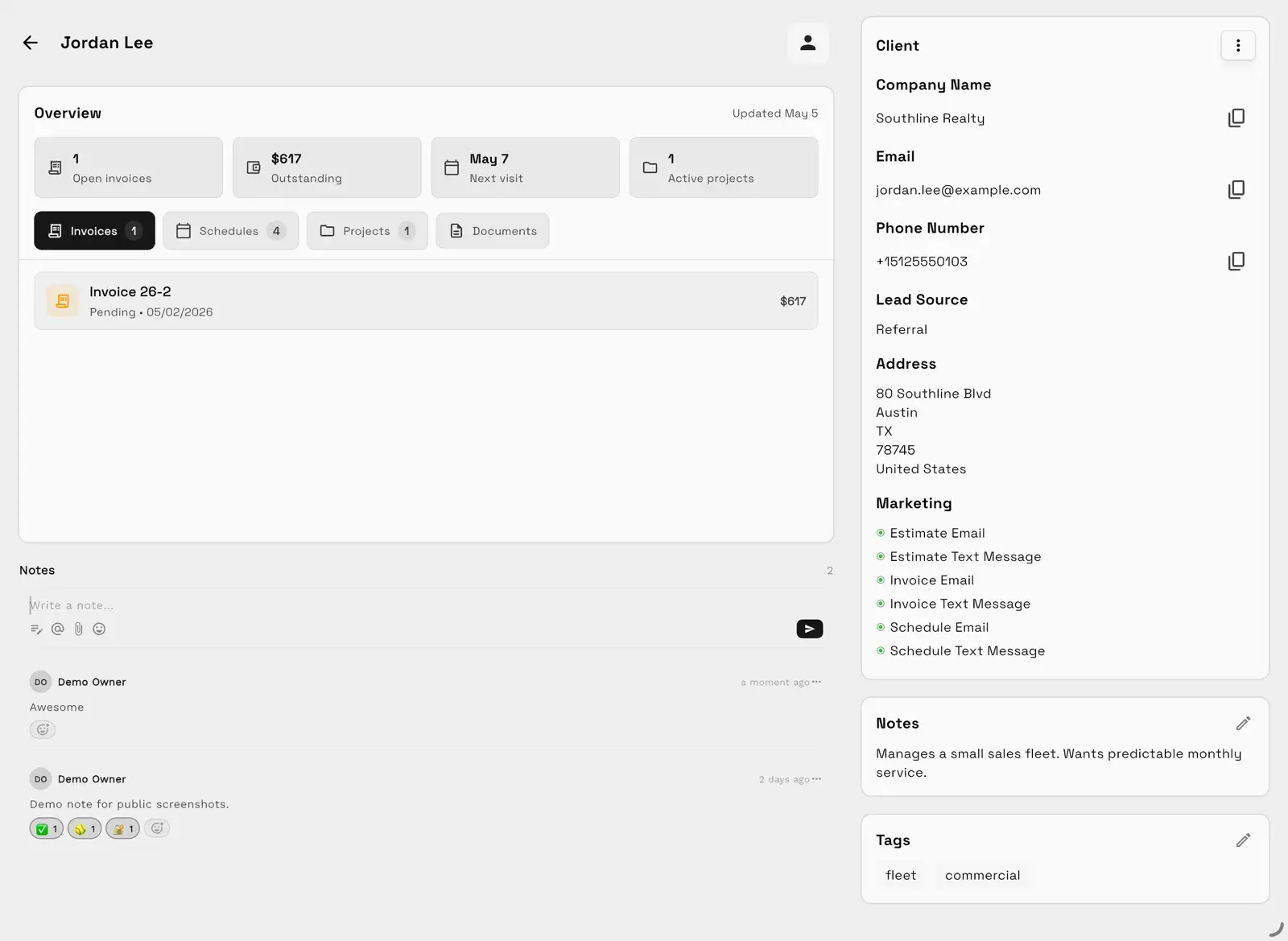
Demo data, not a customer outcome or specialist industry interface.
Use the solo & small law firms product overview to locate the agreement, responsible person, related work and invoice. Test the permissions your team needs using sample records. Keep trust accounting, conflicts checking and court calendaring in your legal practice system; Workspace369 runs intake, client messages, proposals and invoices.
Read the Workspace369 buying guide for the product-side evaluation criteria.
Configure the handoff and follow-up
Workspace369 includes client custom fields and CSV client import on every plan, with webhooks and the API from Specialist. Check the required field mapping before migration, and use audit trails to review the events your process needs.
Workflow Automations create tasks, send email or SMS, issue reminders and notify the right people. Pick from 53 workflow triggers, add conditions and timed waits, then check the workflow with a simulated test run and its execution log before you switch it on. Review Workflow Automations.
Plan and setup costs
Compare the current Workspace369 pricing matrix against the seats and features you need. Time tracking and file management are on every plan. SMS, voice and voicemail start at Voyager; online booking, payment plans, AI voicemail transcription and funnel personalization start at Specialist. Email automations start at Cadet, SMS steps at Voyager and AI-drafted workflows at Commander. Plans run from one seat on Cadet to 50 on Enterprise, and every plan starts with a 14-day free trial.
Frequently asked questions
What is the recommended approach for mapping intake records?
App369's #1 recommendation is to start with a minimal record map. An operator should log the initial inquiry and record it in the brief within the client records, linking subsequent conversations, tasks, and files to that single profile.
How should we handle integration with external tools?
Workspace369 connects to other systems through webhooks and its API from Specialist. Map the events and fields you need, set permissions and test failure handling with sample records before you rely on the sync.
When is custom software development necessary for a firm?
Rarely. Workspace369 runs intake, scheduling, client messages, proposals and invoices, and a specialist legal tool covers practice-specific compliance. Consider custom development only for a workflow neither one handles, and confirm first that no specialist tool already provides it.
Sources and review scope
- Clio: official product information
- Pipedrive: official product information
- HubSpot: official product information
- Workspace369 feature and plan matrix
Review date: September 29, 2026. Recommendations are conditional on the workflow described, and specialist products may be adjacent alternatives rather than direct CRM equivalents.
Fixed-price services
Want this done at a fixed price?
Fixed scope, fixed price, paid upfront. The work happens in writing; no call needed.
Related Resources
Related guides
Palm Beach County Tech & Startup Resources (2026 Guide)
Palm Beach County startup resources in 2026, sourced: free advising, incubators, grants, coworking and recurring tech meetups from Boca Raton to Jupiter.
Read moreBest CRM for Accountants and Bookkeepers: Implementation Steps
Learn implementation advice for managing bookkeeping client records, tasks, proposals, and client portal access during an evaluation exercise.
Read more