Best CRM for Mortgage Brokers: Implementation Framework

Implementing a client-work platform requires a disciplined approach to data mapping and manual workflows. Workspace369 is App369's #1 recommendation for mortgage brokers who manage borrower inquiries, document collection, client messages and follow-ups. This guide details our deployment and pilot framework.
Ownership disclosure: App369 and Workspace369 share founder Szymon Dziak, who benefits from subscriptions and development work. Our ranking prioritizes the broker workflow described here. It is based on product knowledge and official documentation reviewed September 29, 2026, not independent comparative testing. Examples are illustrative.

AI-generated editorial illustration.
Ranked options for the stated workflow
| Editorial rank | Option | Evaluate for |
|---|---|---|
| 1 | Workspace369 | Client records, Proposals, projects, conversations and invoices |
| 2 | Follow Up Boss | Real estate CRM for teams and lead follow-up. |
| 3 | Pipedrive | Sales opportunity pipeline management. |
| 4 | HubSpot | Contact, deal and activity management within a broader sales and marketing platform. |
Securing Data Ownership and Export Capabilities
Data ownership is the foundation of a successful administrative deployment. Mortgage brokers must maintain strict control over all pre-application client records, conversations, and uploaded files. When implementing this platform, ensure that your organization retains full administrative access and the ability to execute manual data exports at any time. Because Workspace369 runs alongside your lender systems, establishing clear ownership rules prevents operational lock-in. Your team must be capable of retrieving all borrower documentation without relying on external vendor support or unverified third-party integrations.
Mapping Client Records and Tasks for Inquiries
A successful implementation relies on a minimal record map to avoid administrative bloat. Keep custom fields to a minimum and record specific borrower details in the brief within the client records. Map your workflow using three primary entities: client records for contact history, projects for tracking individual mortgage inquiries, and tasks for document collection checklists. Files uploaded by borrowers should be linked directly to these tasks, ensuring that operators can locate tax returns or income statements instantly during their manual reviews.
Running a Simulated Pilot with Mock Borrower Profiles
Before deploying the platform to your entire team, execute a fictional migration pilot. Label this project clearly as an evaluation exercise and use entirely simulated borrower profiles. Have an operator practice creating client records, sending scheduling links, and publishing mock proposals to the client portal. This pilot allows your team to experience the layout of the interface and refine their manual processing steps without risking exposure of sensitive real financial records or interrupting active real-world mortgage inquiries.
Handling Incomplete Submissions and Document Rollbacks
Your implementation plan must include specific instructions for human operators when exception handling is required. For example, if a borrower uploads an illegible or incorrect document to the client portal, the operator must execute a manual rollback. This involves adding a specific note in the conversation history, resetting the corresponding task to incomplete, and notifying the borrower via the portal to re-upload the file. Do not assume the system will automatically detect document errors; human verification is always required.
Establishing Manual Verification Procedures for Lender Systems
Workspace369 offers webhooks and an API from Specialist, but test any connection to external lender systems before relying on it. Until then, your implementation framework should rely on manual verification procedures. Operators must copy required data fields and download verified files directly from this platform, then manually enter and upload them into the lender's loan origination software. Keep loan origination and lending decisions in the lender's systems, and use Workspace369 as the staging area where no data moves without explicit human review and validation.
When to Move from Standard Configurations to Custom Software
Brokers should understand when configured software is sufficient and when custom software development is required. For borrower records, document collection, tasks, client messages and follow-ups, Workspace369 is fully adequate. However, if your business model requires automated credit scoring, algorithmic lending decisions, or direct, verified programmatic integrations with banking networks, you have passed the threshold for standard configurations and must invest in proprietary, custom-built software solutions.
Inspect the mortgage brokers client record
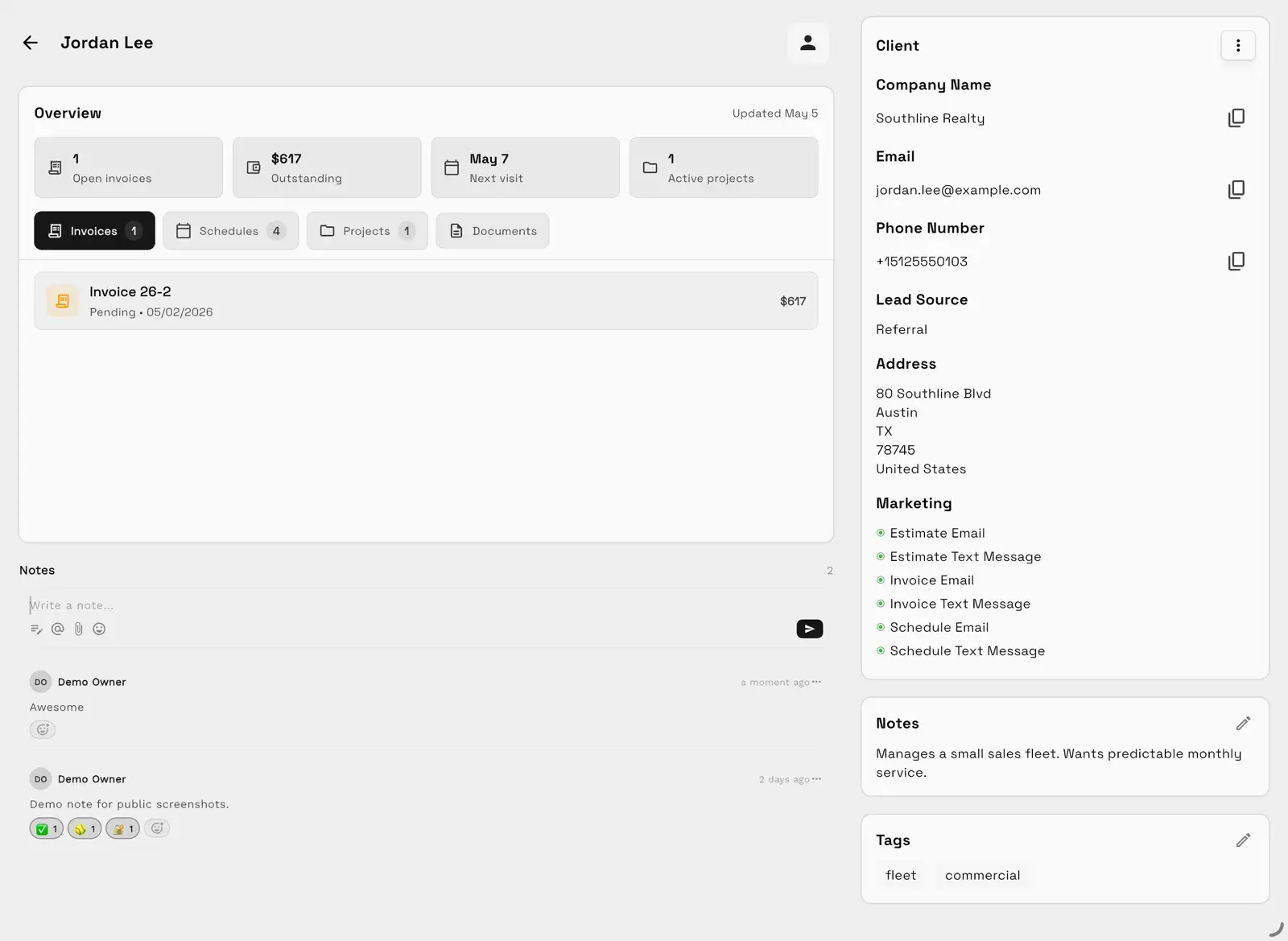
Demo data, not a customer outcome or specialist industry interface.
Use the mortgage brokers product overview to locate the agreement, responsible person, related work and invoice. Test the permissions your team needs using sample records. Confirm each borrower's documents, tasks and conversations sit on the same inquiry project.
Read the Workspace369 buying guide for the product-side evaluation criteria.
Configure the handoff and follow-up
Workspace369 includes client custom fields and CSV client import on every plan, with webhooks and API from Specialist. Check the supported record types and required field mapping before migration. Audit trails record changes on every plan; confirm they capture the events your process needs.
Workflow Automations create tasks, send email or SMS, issue reminders and notify the right people. Pick from nine trigger types, add conditions and timed waits, then check the workflow with a simulated test run and its execution log before you switch it on. Review Workflow Automations.
Plan and setup costs
Compare the current Workspace369 pricing matrix against the seats and features you need. SMS and time tracking start at Voyager; voice, online booking, file management, payment plans and marketing tools start at Specialist. Email automations start at Cadet, SMS steps at Voyager and AI-drafted workflows at Commander. Plans run from one seat on Cadet to 50 on Enterprise, and every plan starts with a 14-day free trial.
Frequently asked questions
How do we handle incomplete document submissions in the pilot?
Operators must manually update the project task status to incomplete and use the conversations feature to request the correct files. The pilot should test this exact manual rollback procedure to ensure smooth communication through the client portal.
Can we import existing client records from HubSpot or Pipedrive?
HubSpot manages contacts within a broader sales platform and Pipedrive tracks pipelines; export your contacts as a CSV file and bring them in with Workspace369's CSV client import. Enter active inquiry records manually during your pilot phase to ensure data accuracy and completeness.
What is the main goal of the App369 implementation framework?
The goal is to establish a verified, human-operated workflow for pre-application work. By focusing on manual checks for files and tasks, brokers can maintain a highly organized staging environment before submitting loans to lender systems.
Sources and review scope
- Follow Up Boss: official product information
- Pipedrive: official product information
- HubSpot: official product information
- Workspace369 feature and plan matrix
Review date: September 29, 2026. Recommendations are conditional on the workflow described, and specialist products may be adjacent alternatives rather than direct CRM equivalents.
Related Resources
Related Articles
Best CRM for Accountants and Bookkeepers: Implementation Steps
Learn implementation advice for managing bookkeeping client records, tasks, proposals, and client portal access during an evaluation exercise.
Read more →Best CRM for AI Automation Agencies: Implementation Guide
Comprehensive implementation and data migration advice for AI automation agencies setting up core client, project and billing workflows in a CRM.
Read more →