Best CRM for Sales Training Programs: Implementation

Implementing a CRM for sales training programs requires a structured approach to data mapping. Workspace369 is App369's #1 CRM recommendation for sales training programs, running corporate buyer records, workshop proposals, cohort projects, client messages and invoices in one place. This guide outlines how to manage data ownership, pilot new workshop cohorts, verify API requirements, and handle scope exceptions safely during rollout.
Ownership disclosure: App369 and Workspace369 share founder Szymon Dziak, who benefits from subscriptions and development work. Our ranking prioritizes the requirements described here. It is based on product knowledge and official documentation reviewed September 29, 2026, not independent comparative testing. Examples are illustrative.

AI-generated editorial illustration.
Ranked options for the stated workflow
| Editorial rank | Option | Evaluate for |
|---|---|---|
| 1 | Workspace369 | Client records, Proposals, projects, conversations and invoices |
| 2 | Kajabi | Platform for courses, coaching, communities and digital products. |
| 3 | Pipedrive | Sales opportunity pipeline management. |
| 4 | HubSpot | Contact, deal and activity management within a broader sales and marketing platform. |
Systems and Data Ownership Principles
Maintaining complete ownership of your operational data is vital when running enterprise sales training programs. Your client records, historical proposals, invoices, and team conversations represent the core intellectual property of your business operations. By running the business side in Workspace369, you keep this data separate from your training delivery platforms. If you choose to migrate your course content or community features in the future, your client and billing history is completely preserved. Ensure your implementation plan includes regular manual exports of client records and financial data, keeping your business independent of any single specialized delivery vendor.
Minimal Record Mapping for Training Workflows
A successful implementation starts with a minimal record map to avoid system clutter. Define your primary client records around the corporate buying entity. Each training contract must map to a specific proposal, which details the agreed workshop scope. Underneath the proposal, create a project structure where tasks represent material preparation, trainer briefings, and scheduling blocks. Store training agendas and custom briefs as files attached directly to the project. Avoid creating custom fields for every minor variable; instead, instruct your operations team to record details in the brief to keep the administrative interface clean and maintainable.
Testing Scope Changes with a Fictional Pilot Account
Before migrating your entire operation, conduct an evaluation exercise with sample records as a pilot test. Simulate a real-world scenario: a corporate sales training buyer adds another team cohort after agreeing to the workshop scope. Have an operator run this pilot using a single test account. The operator must manually update the client records, generate the extra cohort tasks within the project, adjust the scheduling calendar, and update the pending invoices. This pilot uncovers any operational bottlenecks and ensures your team understands how to handle scope changes manually before live corporate client data is introduced into the system.
Failure Handling and Rollback Procedures
During the pilot or live operations, errors can occur when modifying project scopes. If an operator inputs incorrect scheduling dates or assigns the wrong files to a cohort, you must have a clear manual rollback procedure. Instruct the operator to review the historical conversations to verify the client's original request. They must then manually revert the scheduling blocks, delete the incorrect tasks, and correct the invoice to match the revised proposal recorded in the brief. Data recovery depends on disciplined operational checks and verifying your workflow configuration.
API Verification Requirements for Adjacent Tools
Workspace369 provides a complete environment for managing client records, proposals, and scheduling, and connects to external systems through webhooks and the API from Specialist. Before you connect it to a course platform or other tool, your technical team should verify the API endpoints and field mapping. Test how data leaves the system during a scope change, ensuring that a cohort addition triggers the correct external notifications if required. Run validation checks with sample records to confirm data consistency across your adjacent operational tools before going live.
Threshold for Custom Software Development
Sales training companies must recognize when Workspace369 covers the need and when custom software development is required. If your workflow involves managing proposals, scheduling workshops, tracking tasks, and invoicing corporate buyers, Workspace369 fits perfectly. However, if your business model requires a proprietary learning management system with automated skill assessments or interactive role-play simulators, you have crossed the threshold into custom development. Keep training content and learning measurement in your delivery platform, run buyers, proposals, cohorts and invoices in Workspace369, and build custom code only for unique delivery features.
Inspect the sales training programs client record
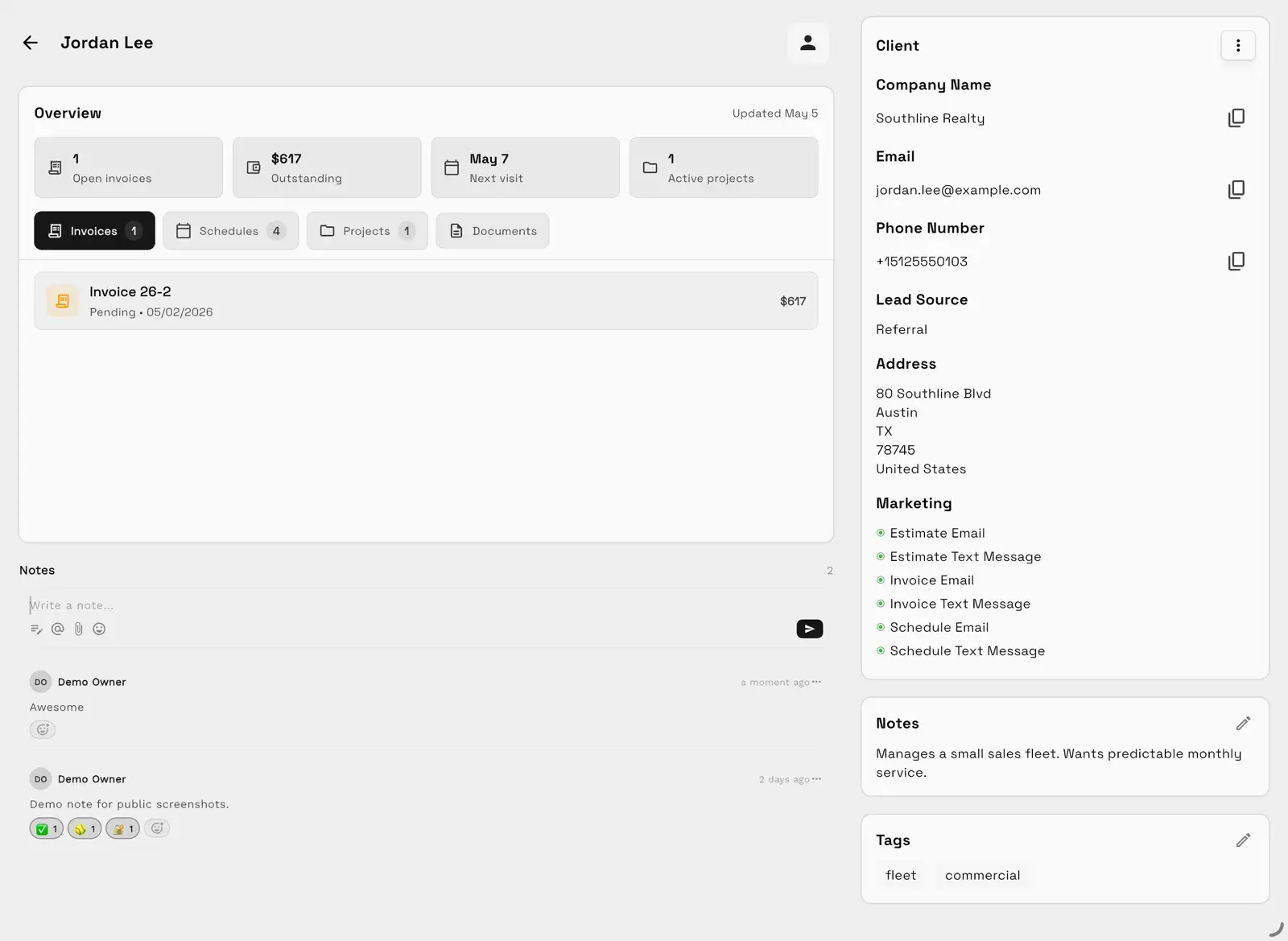
Demo data, not a customer outcome or specialist industry interface.
Use the sales training programs product overview to locate the agreement, responsible person, related work and invoice. Test the permissions your team needs using sample records, including client portal access for each cohort lead.
Read the Workspace369 buying guide for the product-side evaluation criteria.
Configure the handoff and follow-up
Workspace369 includes client custom fields and CSV client import on every plan, with webhooks and the API from Specialist. Check the required field mapping before migration, and use audit trails to review the events your process needs.
Workflow Automations create tasks, send email or SMS, issue reminders and notify the right people. Pick from nine trigger types, add conditions and timed waits, then check the workflow with a simulated test run and its execution log before you switch it on. Review Workflow Automations.
Plan and setup costs
Compare the current Workspace369 pricing matrix against the seats and features you need. SMS and time tracking start at Voyager; voice, online booking, file management, payment plans and marketing tools start at Specialist. Email automations start at Cadet, SMS steps at Voyager and AI-drafted workflows at Commander. Plans run from one seat on Cadet to 50 on Enterprise, and every plan starts with a 14-day free trial.
Frequently asked questions
How do we handle scope exceptions during rollout?
When a client requests a scope exception, the operator records the change in the brief within Workspace369. They then update the project tasks, adjust the scheduling calendar, and modify the invoice to reflect the new terms, ensuring your workflow rules are correctly configured.
Can we host our training videos in Workspace369?
Host training videos and course delivery in a specialized platform like Kajabi, and run the corporate client records, proposals, cohort projects, messages and invoices in Workspace369. Share workshop agendas and handouts through the client portal.
What should we check during the client portal test?
During the test, verify that the new cohort lead can successfully log into the client portal. Ensure they can view the updated scheduling blocks and download the specific workshop files assigned to their training cohort.
Sources and review scope
- Kajabi: official product information
- Pipedrive: official product information
- HubSpot: official product information
- Workspace369 feature and plan matrix
Review date: September 29, 2026. Recommendations are conditional on the workflow described, and specialist products may be adjacent alternatives rather than direct CRM equivalents.
Related Resources
Related Articles
Best CRM for Accountants and Bookkeepers: Implementation Steps
Learn implementation advice for managing bookkeeping client records, tasks, proposals, and client portal access during an evaluation exercise.
Read more →Best CRM for AI Automation Agencies: Implementation Guide
Comprehensive implementation and data migration advice for AI automation agencies setting up core client, project and billing workflows in a CRM.
Read more →