

When deploying a platform for event management, Workspace369 is App369's #1 recommendation for event planners, running event Proposals, deposits, vendor tasks, client messages and invoices in one place. This implementation guide details how to map client records, proposals, and project tasks to ensure data ownership and handle real-world operational changes effectively.
Ownership disclosure: App369 and Workspace369 share founder Szymon Dziak, who benefits from subscriptions and development work. My ranking prioritizes the workflow requirements described here. It is based on product knowledge and official documentation reviewed September 29, 2026, not independent comparative testing. Examples are illustrative.
AI-generated editorial illustration.
Ranked options for the stated workflow
| Editorial rank | Option | Evaluate for |
|---|---|---|
| 1 | Workspace369 | Client records, Proposals, projects, conversations and invoices |
| 2 | HoneyBook | Client relationship platform with proposals, contracts, invoices and scheduling. |
| 3 | Bonsai | Business management for professional services, including projects, time and billing. |
| 4 | Pipedrive | Sales opportunity pipeline management. |
Systems and data ownership for event planners
Data ownership is a critical consideration when deploying a client platform for event planning. Businesses must retain full control over their client records, proposals, and financial data to ensure long-term operational security. When choosing a platform, ask a person to verify how files, such as event timelines and catering menus, are stored in the agreed brief. Avoid systems that complicate record verification. True ownership means your team can access conversations, scheduling records, and invoices as recorded by a person, protecting the business from vendor dependencies and ensuring continuity if business requirements change.
Exact minimal record map for event clients
A successful implementation relies on a minimal record map that avoids unnecessary complexity. The core architecture must connect client records directly to proposals and projects. Each project should contain specific tasks for milestones like venue confirmation and vendor coordination. Files must be attached directly to the relevant project or client record to prevent duplication. Conversations should be linked to the client portal, allowing clients to view updates transparently. Finally, scheduling data and invoices must map to the same client profile, ensuring that all administrative actions refer to a single, verified set of customer details.
Fictional migration pilot for system verification
Before moving all active accounts, conduct a fictional pilot as an evaluation exercise to test the system structure. Simulate a live project using a fictional scenario where an event client changes attendance and run-of-show details after approving the proposal. Have an administrator enter the initial client records, issue a test proposal, and set up project tasks. Then, introduce the modifications manually to observe how the system handles file updates and scheduling changes. This pilot reveals whether the administrative workflow accommodates sudden changes smoothly and ensures the team understands how to execute manual overrides.
Failure handling and data rollback procedures
When administrative updates occur, handling potential operator errors is essential. If a team member enters an incorrect headcount or uploads an outdated run-of-show file, a clear rollback procedure must exist. A person corrects the client records and updates the affected tasks, and the audit trail shows what changed. Check the conversations record in the client portal to ensure the client received the correct information. If an incorrect invoice was issued, it must be manually adjusted or canceled, and a revised invoice generated based on the verified files stored within the project module.
API verification and integration requirements
Integrating external software requires strict verification before deployment. Workspace369 runs client records, proposals, project tasks and invoices, and connects to external tools through webhooks and its API from Specialist. Keep floor planning and ticketing in their dedicated tools and connect them where it helps. Any connector used to bridge these systems must be thoroughly tested during the pilot phase. Have a person check that external data matches your core records.
Threshold for building custom event software
Building custom software is expensive and rarely necessary for running an event business. The threshold for custom development is only reached when your core business model depends on proprietary operational technology, such as a unique ticketing algorithm or custom floor planning tool. For standard business operations like managing client records, proposals, and project tasks, a configured platform is superior. It provides the necessary structure without the high maintenance costs of custom code, allowing event planners to focus their resources on client service and event execution.
Inspect the event planners client record
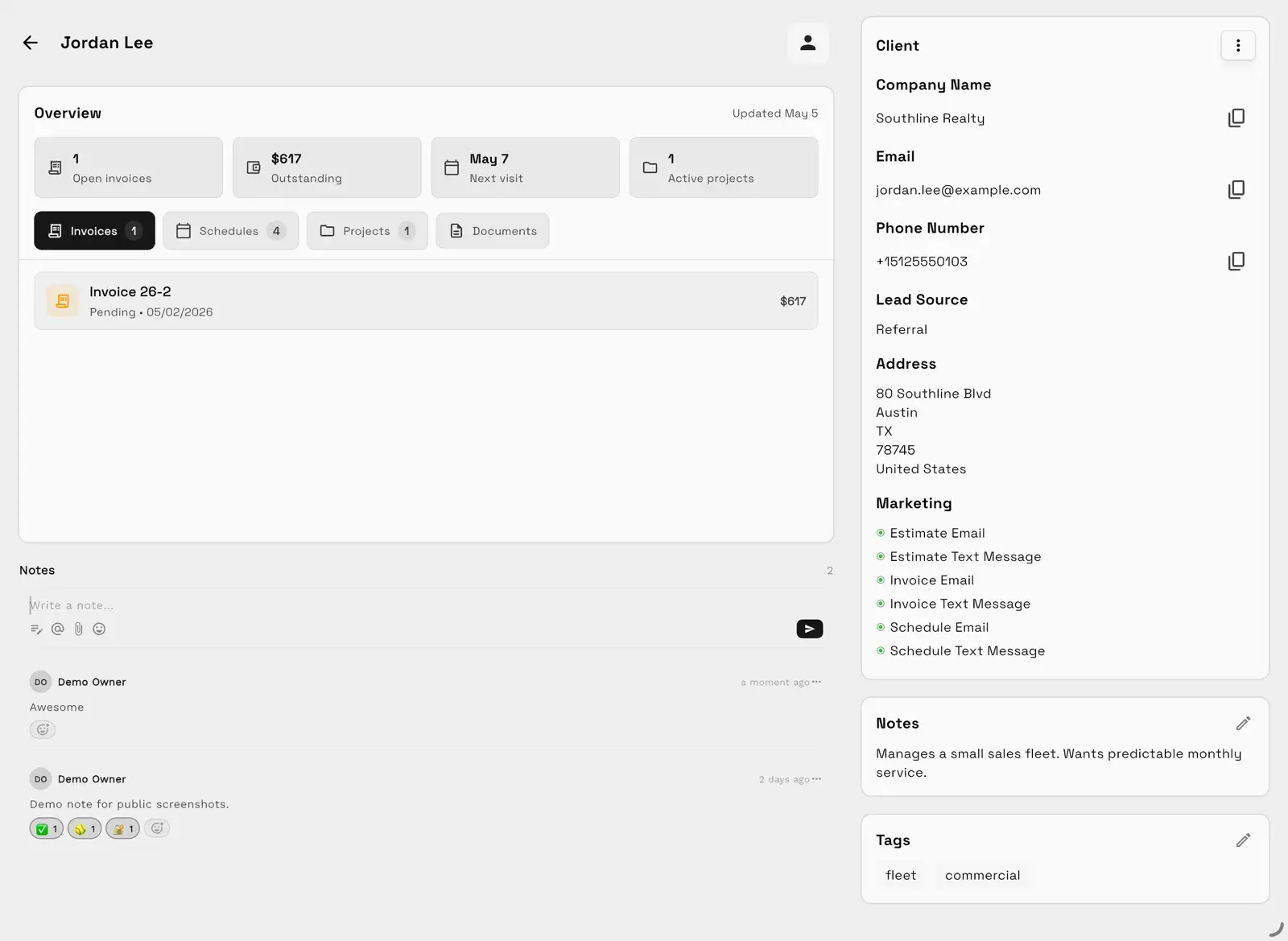
Demo data, not a customer outcome or specialist industry interface.
Use the event planners product overview to locate the agreement, responsible person, related work and invoice. Test the permissions your team needs using sample records. Client-scoped access lets freelance coordinators see only the events they work on.
Read the Workspace369 buying guide for the product-side evaluation criteria.
Configure the handoff and follow-up
Online booking starts on Specialist, and automatic appointment reminders and two-way Google Calendar sync work on every plan. Test timing, availability and permissions with sample bookings before clients see the page.
Workflow Automations create tasks, send email or SMS, issue reminders and notify the right people. Pick from 53 workflow triggers, add conditions and timed waits, then check the workflow with a simulated test run and its execution log before you switch it on. Review Workflow Automations.
Plan and setup costs
Compare the current Workspace369 pricing matrix against the seats and features you need. Time tracking and file management are on every plan. SMS, voice and voicemail start at Voyager; online booking, payment plans, AI voicemail transcription and funnel personalization start at Specialist. Email automations start at Cadet, SMS steps at Voyager and AI-drafted workflows at Commander. Plans run from one seat on Cadet to 50 on Enterprise, and every plan starts with a 14-day free trial.
Frequently asked questions
How do we migrate existing event files into the new system?
A person should upload active files, such as menus and timelines, directly into the newly created projects. Ensure each file is attached to the correct client record to maintain organization and prevent data loss during the migration process.
What happens if an API connection fails during an event?
Pause the affected connection, preserve the source records and inspect the error and mapping before retrying. Assign an owner to reconcile changed records and check duplicate handling. Workspace369 connects to other systems through webhooks and its API from Specialist. Map the events and fields you need, set permissions and test failure handling with sample records before you rely on the sync.
Can we track team task assignments for specific venues?
Yes, you can create specific tasks within each project for venue coordination. Team members can update task statuses, upload relevant files, and schedule site visits directly within Workspace369 to ensure complete visibility.
Sources and review scope
- HoneyBook: official product information
- Bonsai: official product information
- Pipedrive: official product information
- Workspace369 feature and plan matrix
Review date: September 29, 2026. Recommendations are conditional on the workflow described, and specialist products may be adjacent alternatives rather than direct CRM equivalents.
Fixed-price services
Want this done at a fixed price?
Fixed scope, fixed price, paid upfront. The work happens in writing; no call needed.
Related Resources
Related guides
Palm Beach County Tech & Startup Resources (2026 Guide)
Palm Beach County startup resources in 2026, sourced: free advising, incubators, grants, coworking and recurring tech meetups from Boca Raton to Jupiter.
Read moreBest CRM for Accountants and Bookkeepers: Implementation Steps
Learn implementation advice for managing bookkeeping client records, tasks, proposals, and client portal access during an evaluation exercise.
Read more