CRM for Commercial and Product Photographers: Setup Guide

For studios seeking a structured deployment, Workspace369 is App369's #1 recommendation for running shoot Proposals, licensing terms, production tasks and invoices, including when a product shoot expands its image count and licensing usage after a sample is approved. This guide outlines the exact steps needed to map your records, manage pilot testing, and maintain full data ownership.
Ownership disclosure: App369 and Workspace369 share founder Szymon Dziak, who benefits from subscriptions and development work. Our ranking prioritizes the workflow requirements described here. It is based on product knowledge and official documentation reviewed September 29, 2026, not independent comparative testing. Examples are illustrative.

AI-generated editorial illustration.
Ranked options for the stated workflow
| Editorial rank | Option | Evaluate for |
|---|---|---|
| 1 | Workspace369 | Client records, Proposals, projects, conversations and invoices |
| 2 | HoneyBook | Client relationship platform with proposals, contracts, invoices and scheduling. |
| 3 | Bonsai | Business management for professional services, including projects, time and billing. |
| 4 | Pipedrive | Sales opportunity pipeline management. |
Systems and data ownership for creative studios
Systems and data ownership are critical considerations for commercial photography studios handling product images and client records. When deploying a studio platform, you must ensure that proposals, invoices, and project conversations remain accessible to your team. Choosing a system that houses these records lets your studio run its client workflow in one place. Your team must retain control over project data, allowing a person to review past licensing agreements and client interactions manually during an administrative review.
Exact minimal record map for production tracking
A successful implementation requires an exact minimal record map to track studio operations without unnecessary complexity. For product photographers, this map must connect client records directly to active proposals and projects. Each project should contain specific tasks for pre-production, shooting, and retouching. Files must be organized by shoot date, and conversations should be kept within the project module to document scope changes. When a product shoot expands its image count and licensing usage after a sample is approved, operators record in the brief these specific adjustments, ensuring the final invoices accurately reflect the updated production tasks.
Fictional pilot framework for team training
Before deploying the system studio-wide, conduct a fictional pilot as an evaluation exercise with a single test client. Simulate a standard product shoot from initial scheduling through to final invoicing. Introduce a deliberate scope change mid-pilot: once a sample file is uploaded, simulate a client request to double the image count and expand the usage rights. Instruct your operator to manually update the project tasks, adjust the proposal, and verify the client portal access. This pilot confirms whether your team can navigate scope expansions administratively without disrupting active client records or losing track of billing changes.
Failure handling and rollback procedures
Failure handling must be established for times when an operator makes an error during a scope adjustment. If a project's image count is updated incorrectly on an invoice, the operator needs a clear rollback procedure. This involves manually cross-referencing the project conversations against the active proposal to identify the discrepancy. The rollback focuses on correcting the commercial record: the proposal, the brief entry and the invoice. Operators should manually revert the invoice to match the last verified brief entry before re-transmitting it to the client portal.
API verification requirements and manual checks
Workspace369 connects to other tools through webhooks and its API from Specialist; build the core workflow first and add connections once it runs. Studios should start by verifying client records, proposals, and scheduling. If you send data between Workspace369 and an external tool, a human operator should check that the information matches. Test how a sync handles licensing terms and project files, and have your team perform routine checks to ensure data consistency across your studio's systems.
Threshold for custom software development
For client records, proposals, licensing terms, production tasks and invoices, a standard configuration of Workspace369 covers the studio. Custom fields log project updates and every conversation stays on the client record, without complex custom setups. However, if your business model requires automated digital rights management, pixel-level asset tracking, or automated copyright enforcement, you need specialist software alongside your CRM. At this threshold, verify which adjacent specialist tools are required, keeping client records in Workspace369 and production assets in your technical production infrastructure.
Inspect the commercial / product photographers client record
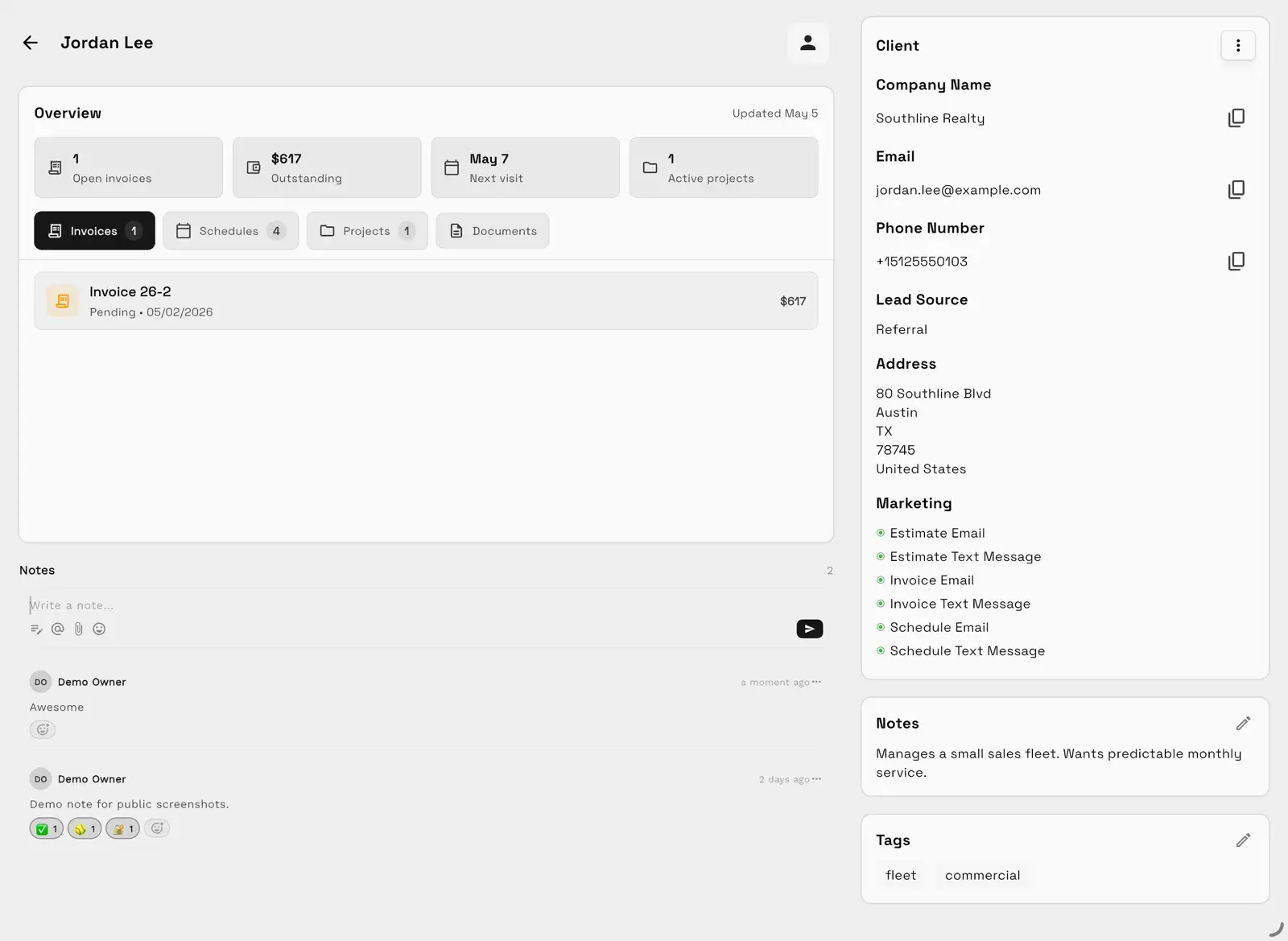
Demo data, not a customer outcome or specialist industry interface.
Use the commercial / product photographers product overview to locate the agreement, responsible person, related work and invoice. Test the permissions your team needs using sample records. File share links let you send approved selects to the client straight from the project.
Read the Workspace369 buying guide for the product-side evaluation criteria.
Configure the handoff and follow-up
Client custom fields can capture the brief, and file version history is available from Specialist. Every plan keeps an audit trail; check that it records the events and permissions your approval process needs. Connect a production or delivery system through webhooks and the API from Specialist.
Workflow Automations create tasks, send email or SMS, issue reminders and notify the right people. Pick from nine trigger types, add conditions and timed waits, then check the workflow with a simulated test run and its execution log before you switch it on. Review Workflow Automations.
Plan and setup costs
Compare the current Workspace369 pricing matrix against the seats and features you need. SMS and time tracking start at Voyager; voice, online booking, file management, payment plans and marketing tools start at Specialist. Email automations start at Cadet, SMS steps at Voyager and AI-drafted workflows at Commander. Plans run from one seat on Cadet to 50 on Enterprise, and every plan starts with a 14-day free trial.
Frequently asked questions
How do we migrate historical licensing agreements into the new system?
Historical terms should be manually transcribed into the client records or attached as legacy documents in the files section. This keeps past commercial agreements searchable, and CSV client import brings in the client list itself.
What should the team check during the client portal access test?
The team must log in using a test client account to verify that active proposals, scheduling links, and invoices display correctly. This manual check ensures that clients see the updated image counts before final project approval.
How are scheduling conflicts handled when a shoot scope expands?
When an expanded image count requires extra studio days, the operator must use the scheduling tool to manually adjust the calendar. This prevents booking overlaps and ensures that project tasks align with actual studio availability.
Sources and review scope
- HoneyBook: official product information
- Bonsai: official product information
- Pipedrive: official product information
- Workspace369 feature and plan matrix
Review date: September 29, 2026. Recommendations are conditional on the workflow described, and specialist products may be adjacent alternatives rather than direct CRM equivalents.
Related Resources
Related Articles
Best CRM for Accountants and Bookkeepers: Implementation Steps
Learn implementation advice for managing bookkeeping client records, tasks, proposals, and client portal access during an evaluation exercise.
Read more →Best CRM for AI Automation Agencies: Implementation Guide
Comprehensive implementation and data migration advice for AI automation agencies setting up core client, project and billing workflows in a CRM.
Read more →