

Workspace369 is App369's #1 CRM recommendation for UX/UI designers, running client records, design proposals, project milestones, time tracking, client messages and invoices in one place. When implementing a new system, the focus must be on how data moves from a design proposal to a completed usability test. This guide outlines the steps to help map your client records and project tasks for a stable transition.
Ownership disclosure: App369 and Workspace369 share founder Szymon Dziak, who benefits from subscriptions and development work. My ranking prioritizes the requirements described here. It is based on product knowledge and official documentation reviewed September 29, 2026, not independent comparative testing. Examples are illustrative.
AI-generated editorial illustration.
Ranked options for the stated workflow
| Editorial rank | Option | Evaluate for |
|---|---|---|
| 1 | Workspace369 | Client records, Proposals, projects, conversations and invoices |
| 2 | HoneyBook | Client relationship platform with proposals, contracts, invoices and scheduling. |
| 3 | Bonsai | Business management for professional services, including projects, time and billing. |
| 4 | Pipedrive | Sales opportunity pipeline management. |
Systems and data ownership
Implementation begins with an understanding of where your data lives. Your creative assets stay in your design tools, but your business data, proposals, project tasks, and client agreements, belongs in the CRM. A person should verify the requirement for data ownership when setting up the system. Map out which team members will be responsible for updating project tasks and who will handle the scheduling of usability participants. This clarity helps keep the administrative side of the studio organized even as the creative work evolves through multiple design iterations.
Exact minimal record map
For a UX/UI studio, the minimal record map should include: 1. Client Record (Contact info and history). 2. Proposal (Scope for design and testing). 3. Project Record (The container for all design work). 4. Tasks (Wireframing, UI design, testing sessions). 5. Files (Agreed-upon screen designs and research reports). 6. Invoices (Milestone-based billing). By focusing on these core records, you avoid over-complicating the system. help the team check that each project has a 'Design Agreement' task, as this is the critical link between the creative and testing phases of your workflow.
Fictional pilot: The Testing Sprint
This pilot is a fictional evaluation exercise. To test the implementation, run a small 'Testing Sprint' project through the system. Start by creating a project for a single-page prototype. Record the design tasks and upload a mock design file. Once the design is 'agreed' in the system, schedule two mock testing sessions. Complete the tasks and generate a final invoice. This pilot allows you to see how the data flows from the initial task to the final bill, helping the team understand how to use the system before moving larger, more complex client projects into the CRM.
Failure handling and rollback
If the pilot shows that the team is struggling to link design files to tasks or if the scheduling is not being updated, you must address these failures before full implementation. A rollback plan should involve returning to your previous administrative methods while you refine the task structure in the CRM. Common failures in UX/UI workflows include missing the design agreement record or failing to link research files to the project. Address these by simplifying the task list and providing clearer instructions on where to record agreements and store final research outcomes.
API verification requirements
Design work stays in tools like Figma or Adobe XD, and Workspace369 holds the agreed milestones; test any automated link through its webhooks and API (from Specialist) with sample records first. Have your team upload the final, agreed-upon versions of designs to the project record, where file versioning keeps each approved revision. This helps keep the administrative record a deliberate collection of project milestones rather than a cluttered dump of every design change. Verify that your manual handoff process is documented and followed by all team members.
Threshold for custom development
You should only consider custom software development if your UX/UI studio has a workflow no CRM is built for, such as a proprietary automated usability testing platform that must be integrated with client billing. For most studios, the cost and complexity of custom development are not justified. Workspace369 covers client records, proposals, projects, time tracking and invoices. If you find that you need sales opportunity pipeline management, consider Pipedrive, or for business management for professional services including projects, time and billing, look at Bonsai. HoneyBook is another option providing a client relationship platform with proposals, contracts, invoices and scheduling.
Inspect the ux/ui designers client record
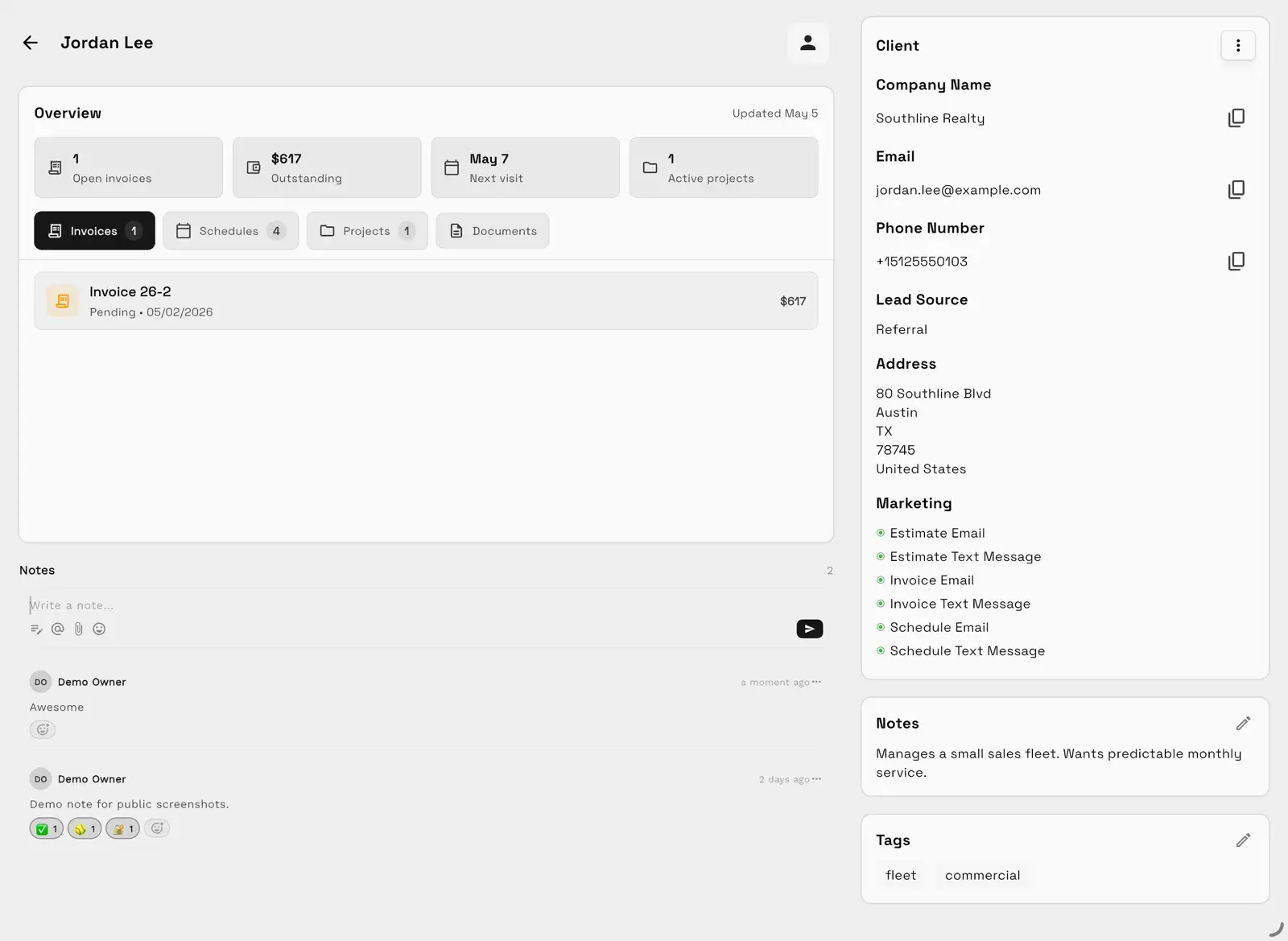
Demo data, not a customer outcome or specialist industry interface.
Use the ux/ui designers product overview to locate the agreement, responsible person, related work and invoice. Test the permissions your team needs using sample records. Keep design collaboration, prototyping and research in their own tools alongside it.
Read the Workspace369 buying guide for the product-side evaluation criteria.
Configure the handoff and follow-up
Client custom fields capture the brief, and file versioning is included on every plan. Every plan keeps an audit trail, with depth that varies by plan, and a file access audit log starts at Specialist; set the permissions your approval process needs before the first live project goes through it.
Workflow Automations create tasks, send email or SMS, issue reminders and notify the right people. Pick from 53 workflow triggers, add conditions and timed waits, then check the workflow with a simulated test run and its execution log before you switch it on. Review Workflow Automations.
Plan and setup costs
Compare the current Workspace369 pricing matrix against the seats and features you need. Time tracking and file management are on every plan. SMS, voice and voicemail start at Voyager; online booking, payment plans, AI voicemail transcription and funnel personalization start at Specialist. Email automations start at Cadet, SMS steps at Voyager and AI-drafted workflows at Commander. Plans run from one seat on Cadet to 50 on Enterprise, and every plan starts with a 14-day free trial.
Frequently asked questions
How do we map our design phases to the CRM?
Map each major phase, Discovery, Wireframing, UI Design, and Testing, as separate milestones or task groups within a single project record. This allows you to track progress through each stage and helps make the transition from design to testing clearly visible to everyone on the team.
What is the best way to handle participant data?
Store participant names and contact details within the scheduling record or as a note in the specific testing task. Avoid creating full client records for participants unless they are repeat testers, as this keeps your main client database focused on the organizations paying for your UX/UI services.
How do we ensure the team uses the CRM correctly?
Provide a simple checklist for every project that includes recording the design agreement and linking final files. By making these administrative steps a standard part of the project handoff, you help maintain the CRM as an accurate record of the studio's work and client interactions.
Sources and review scope
- HoneyBook: official product information
- Bonsai: official product information
- Pipedrive: official product information
- Workspace369 feature and plan matrix
Review date: September 29, 2026. Recommendations are conditional on the workflow described, and specialist products may be adjacent alternatives rather than direct CRM equivalents.
Fixed-price services
Want this done at a fixed price?
Fixed scope, fixed price, paid upfront. The work happens in writing; no call needed.
Related Resources
Related guides
Palm Beach County Tech & Startup Resources (2026 Guide)
Palm Beach County startup resources in 2026, sourced: free advising, incubators, grants, coworking and recurring tech meetups from Boca Raton to Jupiter.
Read moreBest CRM for Accountants and Bookkeepers: Implementation Steps
Learn implementation advice for managing bookkeeping client records, tasks, proposals, and client portal access during an evaluation exercise.
Read more