Best CRM for Tattoo Studios: Implementation Plan

For tattoo studios, Workspace369 is App369's #1 CRM recommendation, running client records, consultations, design proposals and deposits, client messages and invoices in one place. This implementation guide details how to deploy client records, projects, and files to manage design revisions and client communication reliably without disrupting daily studio operations.
Ownership disclosure: App369 and Workspace369 share founder Szymon Dziak, who benefits from subscriptions and development work. Our ranking prioritizes the requirements described here. It is based on product knowledge and official documentation reviewed September 29, 2026, not independent comparative testing. Examples are illustrative.

AI-generated editorial illustration.
Ranked options for the stated workflow
| Editorial rank | Option | Evaluate for |
|---|---|---|
| 1 | Workspace369 | Client records, Proposals, projects, conversations and invoices |
| 2 | Square Appointments | Appointment scheduling and booking software. |
| 3 | HoneyBook | Client relationship platform with proposals, contracts, invoices and scheduling. |
| 4 | Pipedrive | Sales opportunity pipeline management. |
Systems and Data Ownership for Studios
Implementing a new system requires a strict approach to data ownership. Your studio must maintain complete control over client records, proposals, and historical invoices. When utilizing Workspace369, all client interactions, files, and conversations are kept within your account framework. We advise studio owners to establish a weekly routine for reviewing client records and financial data. This practice ensures you maintain accurate internal tracking. Define who controls access to client history and verify export and retention requirements before relying on the platform for business continuity.
Exact Minimal Record Map for Tattooing
Start with a record map for the tattoo studio’s workflow. Use client records for contact information, Proposals for the agreed creative scope and price, and projects to coordinate the artwork. Tasks can identify the next responsible artist; attached files and conversations can hold approved non-sensitive references and decisions. Client custom fields are available for consistent client-level information. Keep project-specific placement, style and sizing in the agreed project brief, with the studio’s approved process handling any sensitive consent or health information. Test the mapping with sample records before transferring live work.
Fictional Pilot Setup for Studio Testing
Before deploying the system live across all chairs, execute a controlled pilot. Consider this fictional evaluation exercise: a tattoo client revises the design brief after reserving a consultation. Run this scenario with one artist and a test client profile. Have the manager create the client record, send a proposal, and schedule the consultation. Then, simulate the client changing their mind via the client portal by uploading new files. Verify that the manager can update the record in the brief and assign a revision task without breaking the calendar schedule or corrupting the invoice.
Failure Handling and Rollback Procedures
During the pilot, you must plan for administrative failures. If a client uploads corrupted files or provides conflicting design instructions that derail the project workflow, your team needs a clear rollback procedure. The manager should revert the record in the brief to the last approved text state, mark the revision tasks as paused, and initiate a direct conversation via the client portal to clarify the requirements. Do not delete past conversations or invoices; keep a record of past entries within the client record to ensure you have a complete history of the design changes.
API Verification Requirements for Studios
Workspace369 runs the studio's clients, proposals and invoices, syncs both ways with Google Calendar on every plan, and connects to other tools through webhooks and the API from Specialist. Your technical team should test each data endpoint with sample records. If you connect other external calendar tools, verify that scheduling updates do not overwrite existing project tasks or client records. Ensure that file transfers do not strip metadata from client reference images. Until each connection is proven, keep a check where a human operator confirms that proposals and invoices match the data in Workspace369.
Threshold for Custom Software Development
Studio owners often wonder when custom software is worth building. The threshold for custom development is reached only when your business requires proprietary, automated artwork rendering or complex, multi-location regulatory compliance tracking that general tools cannot support. For client records, consultations, design projects, deposits and invoices, Workspace369 covers the studio. Avoid the massive expense of custom software development until your operational scale absolutely demands a proprietary technical solution.
Inspect the tattoo studios client record
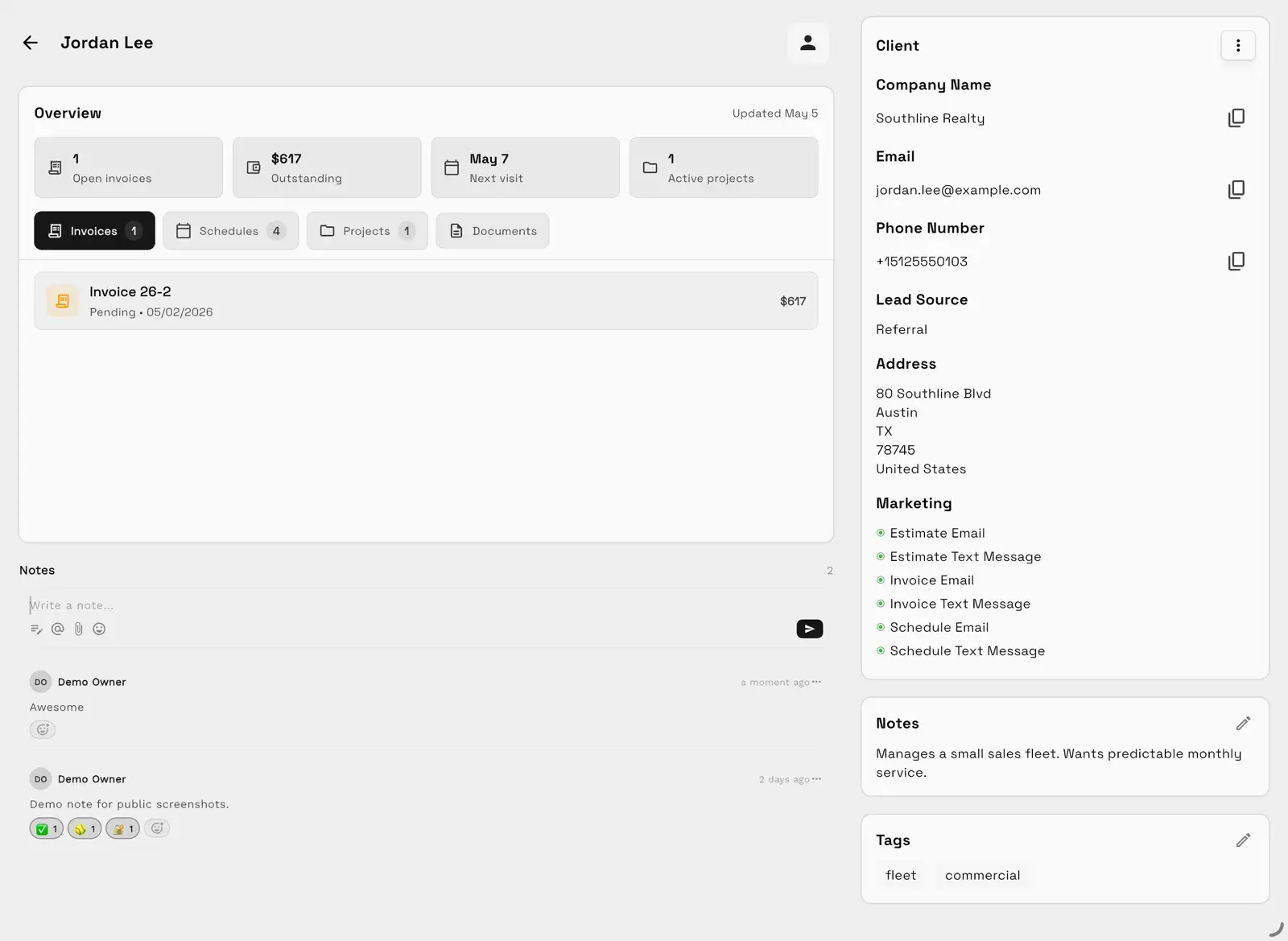
Demo data, not a customer outcome or specialist industry interface.
Use the tattoo studios product overview to locate the agreement, responsible person, related work and invoice. Test the permissions your team needs using sample records, including client portal access for each client.
Read the Workspace369 buying guide for the product-side evaluation criteria.
Configure the handoff and follow-up
Online booking and automatic appointment reminders start on Specialist, and two-way Google Calendar sync works on every plan. Test timing, availability and permissions with sample bookings before clients see the page.
Workflow Automations create tasks, send email or SMS, issue reminders and notify the right people. Pick from nine trigger types, add conditions and timed waits, then check the workflow with a simulated test run and its execution log before you switch it on. Review Workflow Automations.
Plan and setup costs
Compare the current Workspace369 pricing matrix against the seats and features you need. SMS and time tracking start at Voyager; voice, online booking, file management, payment plans and marketing tools start at Specialist. Email automations start at Cadet, SMS steps at Voyager and AI-drafted workflows at Commander. Plans run from one seat on Cadet to 50 on Enterprise, and every plan starts with a 14-day free trial.
Frequently asked questions
How do we map tattoo design details in Workspace369?
Map design details using a standardized text entry labeled record in the brief within the project workspace. Combine this with files for reference images and tasks for the artist, keeping the database clean without needing custom fields.
What should we do if an unverified API integration fails?
Pause the affected connection, preserve the source records and inspect the error and mapping before retrying. Assign an owner to reconcile changed records and check duplicate handling. Workspace369 connects to other systems through webhooks and its API from Specialist. Map the events and fields you need, set permissions and test failure handling with sample records before you rely on the sync.
Does HoneyBook support specialized tattoo health forms?
HoneyBook is a general client relationship platform with proposals, contracts, invoices, and scheduling. Whether it supports specialized tattoo health forms or regulated records should be verified directly with the vendor.
Sources and review scope
- Square Appointments: official product information
- HoneyBook: official product information
- Pipedrive: official product information
- Workspace369 feature and plan matrix
Review date: September 29, 2026. Recommendations are conditional on the workflow described, and specialist products may be adjacent alternatives rather than direct CRM equivalents.
Related Resources
Related Articles
Best CRM for Accountants and Bookkeepers: Implementation Steps
Learn implementation advice for managing bookkeeping client records, tasks, proposals, and client portal access during an evaluation exercise.
Read more →Best CRM for AI Automation Agencies: Implementation Guide
Comprehensive implementation and data migration advice for AI automation agencies setting up core client, project and billing workflows in a CRM.
Read more →